

The Power of Repetition in Garden Design (And Why It Creates Calm)
One of the most common beginner gardening mistakes is surprisingly simple:
Trying to include too many different plants.
It’s understandable.
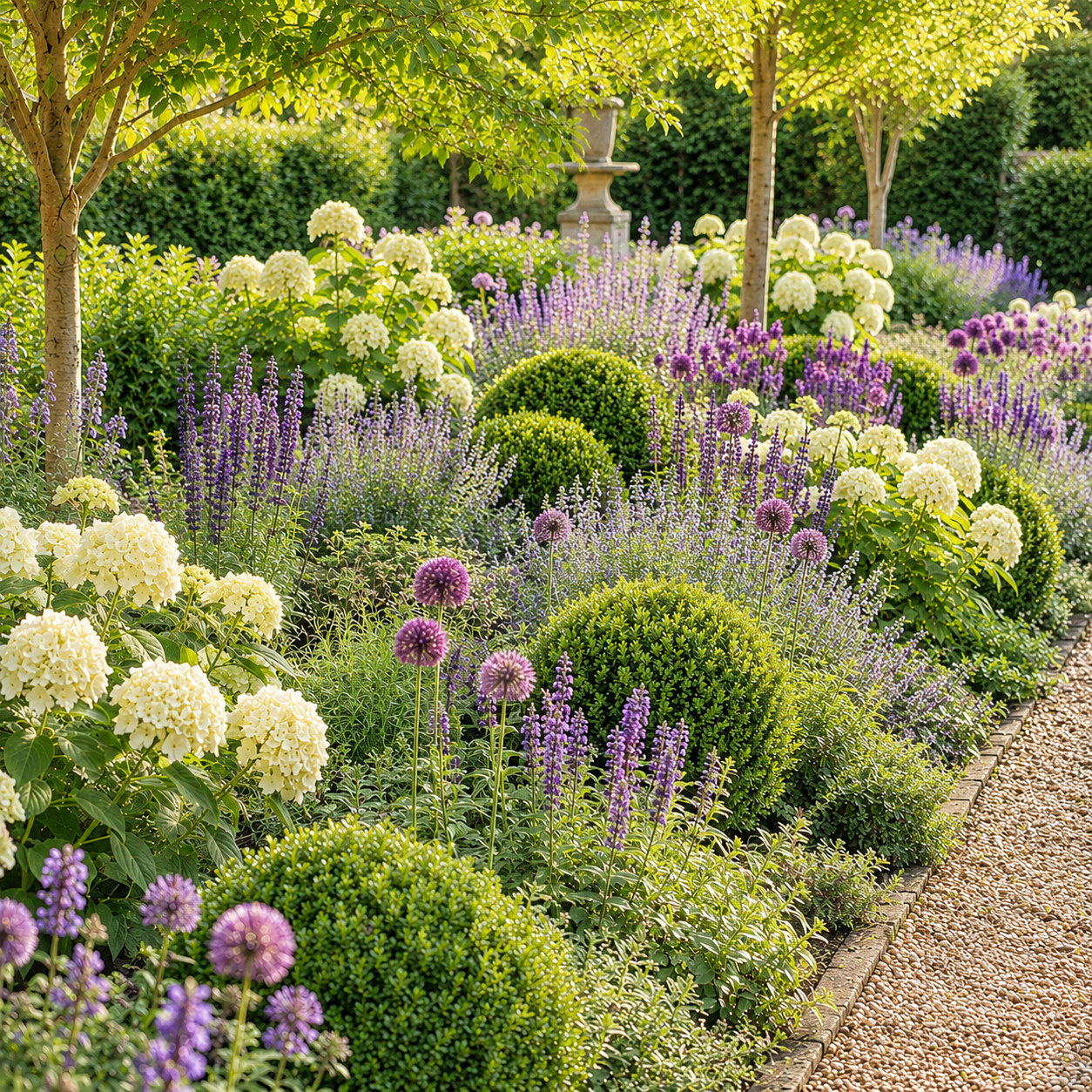
Repetition Demonstrated in a Informal Garden
At the nursery, every plant feels exciting on its own.
But gardens designed one plant at a time often feel visually busy instead of peaceful.
Designers use a different approach.
They repeat.
Why Repetition Matters
Repetition creates rhythm.
When certain plants, colors, or textures appear again throughout the landscape, the eye begins to relax.
The space feels connected instead of scattered.
This is one of the quiet principles behind gardens that feel calm the moment you enter them.
Repetition Works Beautifully with the 3-Layer Method
Over the years, I’ve come to think about planting in three simple layers:
🌿 Structure
🌸 Story
🌱 Stitch
And repetition is often what ties all three together.
🌿 Repeating Structure
Repeating evergreen shrubs or anchor plants creates stability throughout the landscape.
This gives the eye familiar reference points.
🌸 Repeating Story
Repeating flower colors, grasses, or seasonal textures helps the garden feel cohesive rather than random.
Even small echoes create harmony.
🌱 Repeating Stitch
Groundcovers repeated throughout planting beds quietly connect the entire garden together.
This softens transitions and creates flow.
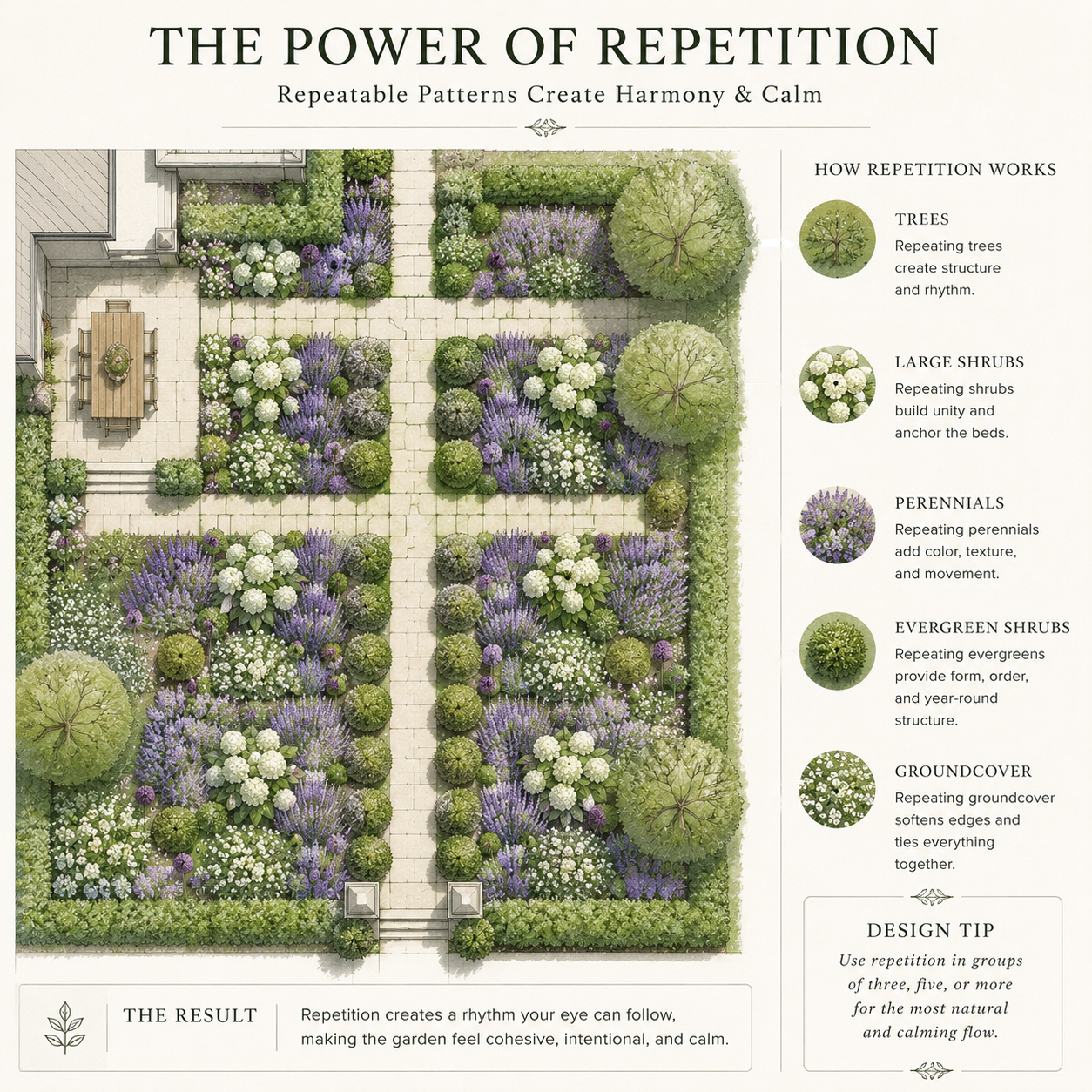
Why Repetition Feels So Good
Human beings naturally seek patterns.
When the eye notices repeated forms, colors, or textures, the landscape becomes easier to understand.
That creates a feeling of calm.
Without repetition, gardens can feel visually noisy.
With repetition, even simple gardens feel intentional.
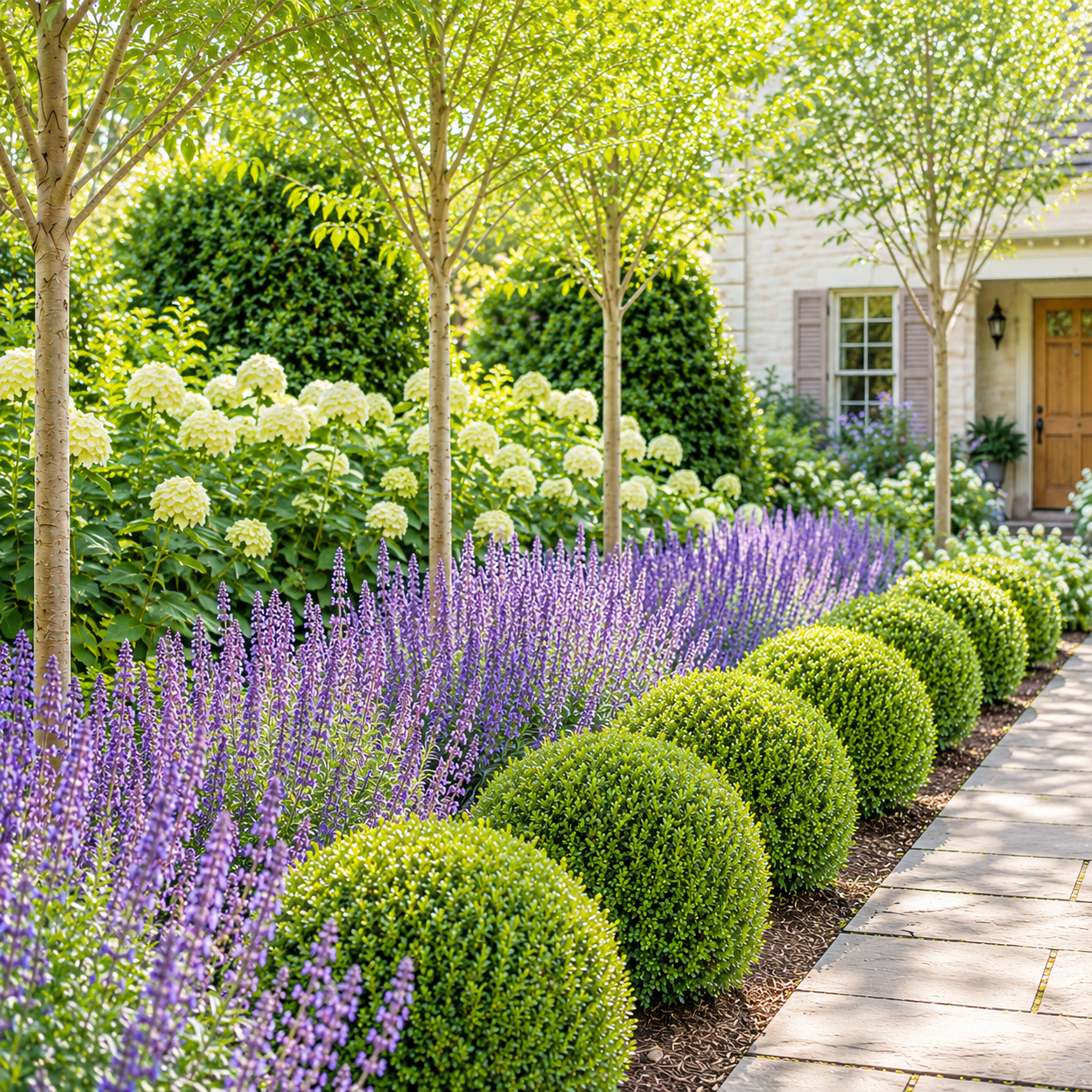
Repetition Demonstrated in a Formal Garden
A Simple Way to Start
Choose one or two plants you truly love.
Then repeat them thoughtfully throughout the space.
You don’t need dozens of varieties to create beauty.
Often, less variety creates more harmony.
Final Thought
The most memorable gardens rarely rely on endless variety.
They rely on rhythm.
And repetition is what creates it.