

How Sunlight Moves Through Your Garden (And Why It Matters More Than You Think)
When people begin planning a garden, they often start with plants.
But experienced designers begin somewhere else.
They start with light.
Sunlight quietly influences everything in a landscape—from which plants thrive to where people naturally want to sit and spend time.
Understanding how light moves through your yard can make the difference between a garden that struggles and one that flourishes.

Why Light Matters in Garden Design
Every plant has a preference for sunlight.
Some thrive in full sun, while others prefer filtered shade or cooler woodland conditions.
But sunlight affects more than plant health.
It also influences:
• where outdoor seating feels comfortable
• how warm or cool certain areas feel
• when a garden looks most beautiful throughout the day
A sunny patio may feel wonderful in April but overwhelming in July. Meanwhile, a shaded corner might become the most peaceful retreat in summer.
Early Spring Reveals Sunlight Patterns
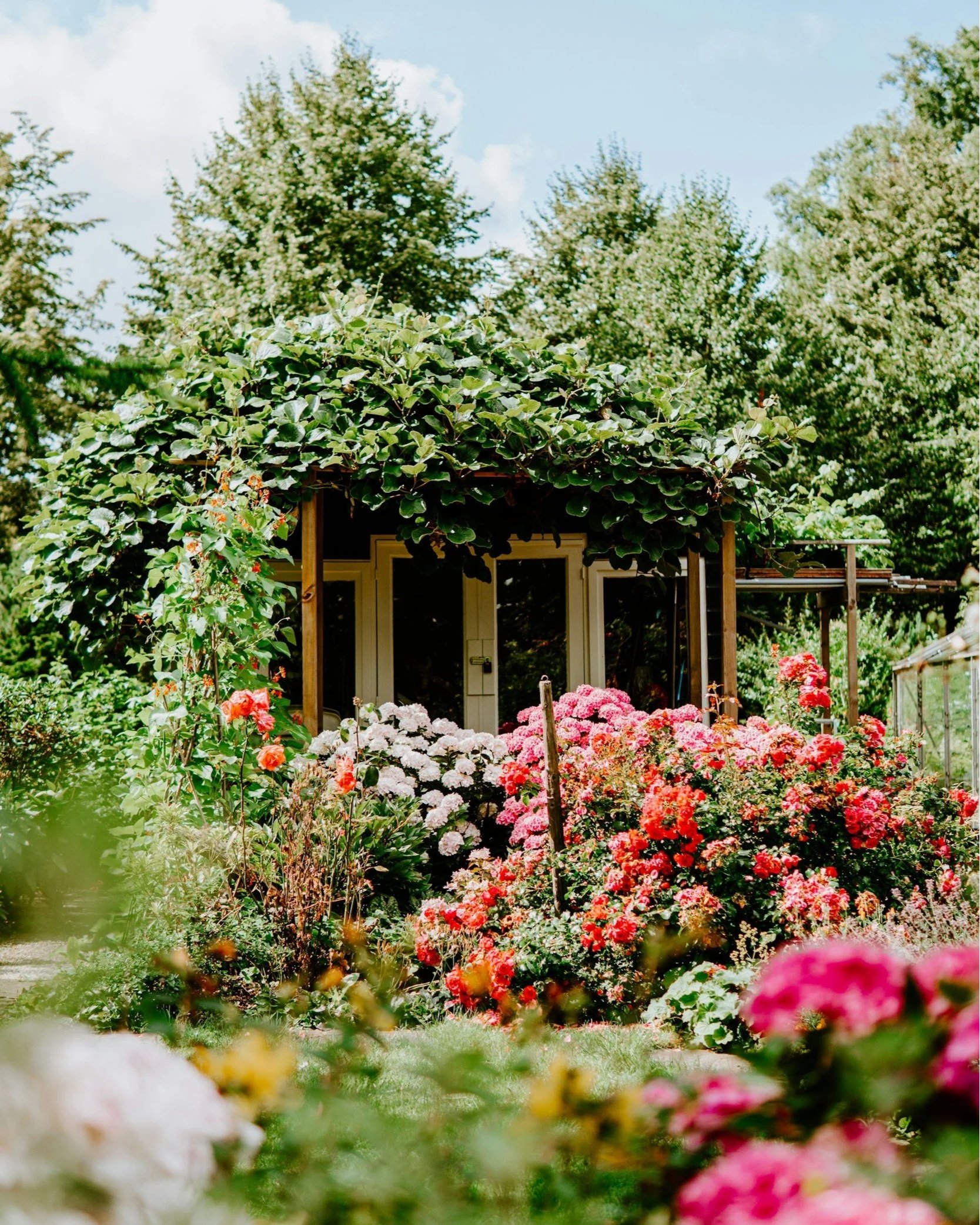
Roses Preform Best with Morning Sun
March and early April offer one of the best opportunities to observe sunlight clearly.
Without dense foliage blocking the sky, sunlight reaches deeper into the garden.
This allows you to see:
• where morning light appears first
• which spaces remain shaded longer
• how shadows move during the day
Later in the season, tree canopies and full plant growth can hide these patterns.
How to Study Your Garden's Sunlight
You don't need special tools.
Just observation.
Choose a clear day and check your yard at three different times:
Morning
Midday
Late afternoon
Notice which areas are bright and which remain shaded.
Many gardeners are surprised by what they discover.
A space that seems sunny may receive only a few hours of light, while another corner stays bright most of the day.
What Designers Look For

Elephant Ear Paired with Loropetalum (Fringe Flower)
When designers study light, they watch for patterns that shape the entire garden.
They notice:
• where morning light warms the garden
• areas that receive strong afternoon sun
• cool pockets of shade
• how trees and buildings create shifting shadows
These observations guide decisions about plant placement, seating areas, and garden layout.
Let the Light Guide Your Garden
Instead of fighting the sun, let it guide your design.
Place sun-loving plants where light naturally falls. Use shaded spaces for quiet seating areas or plants that prefer cooler conditions.
When your garden works with its natural light instead of against it, everything becomes easier.