

The Garden Apothecary: Growing a Garden That Gives Back
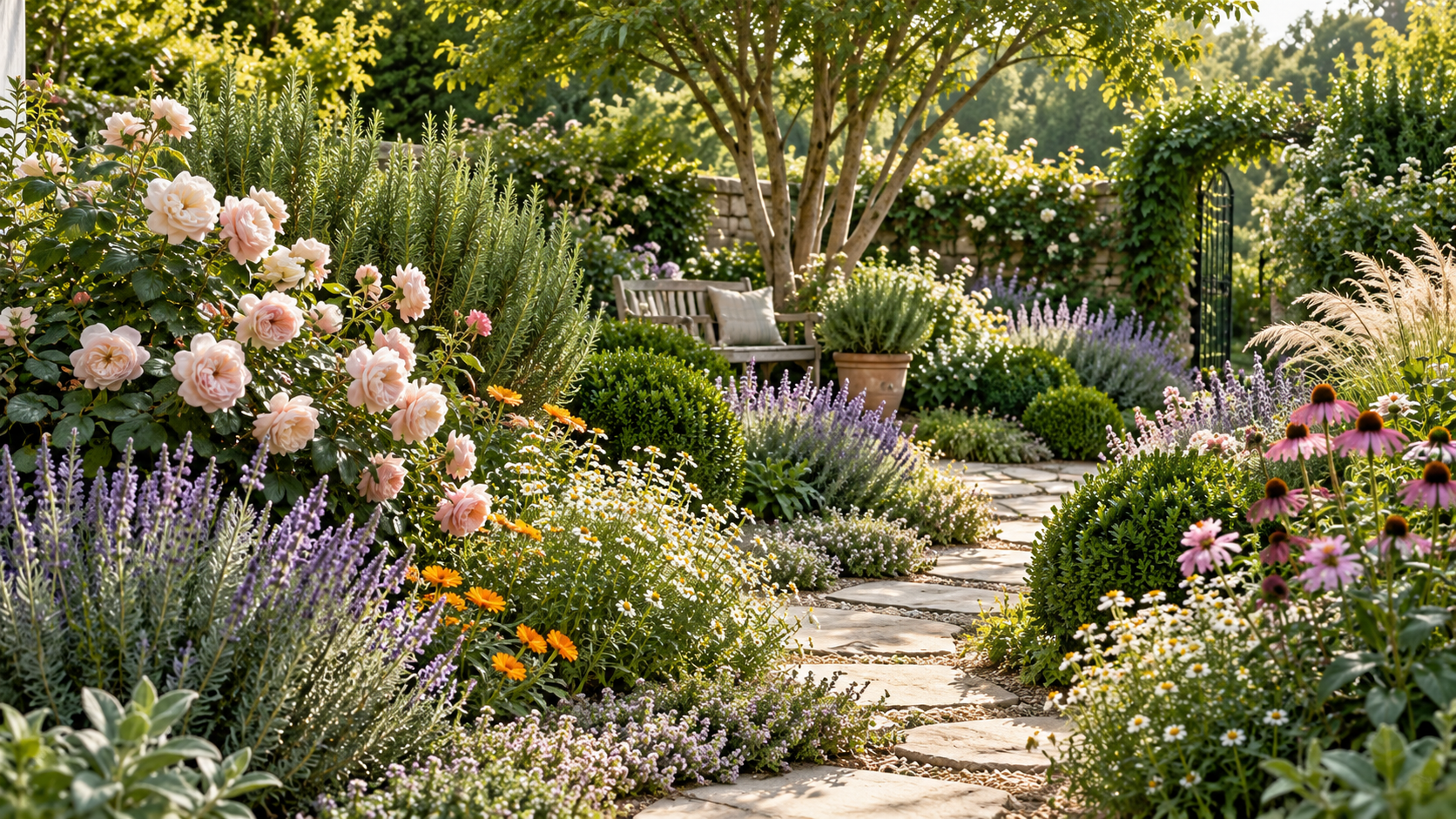
There's something special about a garden that gives us more than something beautiful to look at.
The scent of rosemary when we brush against it. A handful of fresh herbs gathered for dinner. Lavender drying in small bundles. Flowers that can be cut and brought inside to enjoy.
These are simple pleasures, but they're part of what makes a garden feel connected to our everyday lives.
Lately, I've been thinking about the idea of a Garden Apothecary—a place where beautiful plants and useful plants become one and the same.
Traditionally, apothecary gardens were places where herbs and other plants were grown for household and medicinal uses. Today, I love the idea of bringing that same sense of purpose into our gardens, whether we're growing culinary herbs, fragrant flowers, or plants we simply enjoy gathering and drying.
And from a landscape design perspective, I think there's something especially interesting about this kind of garden.
We're not just designing something to look at. We're designing something to experience.
A Garden You Can Enjoy With All Your Senses
When I think about what makes a garden memorable, it isn't always the most colorful flower or the most unusual plant.
Sometimes it's the fragrance that greets you as you walk along a path. The soft texture of a leaf. The movement of grasses in the breeze. Or the familiar scent of an herb that reminds you of something you've cooked or a place you've visited.
An apothecary garden naturally invites us to pay attention to those details.
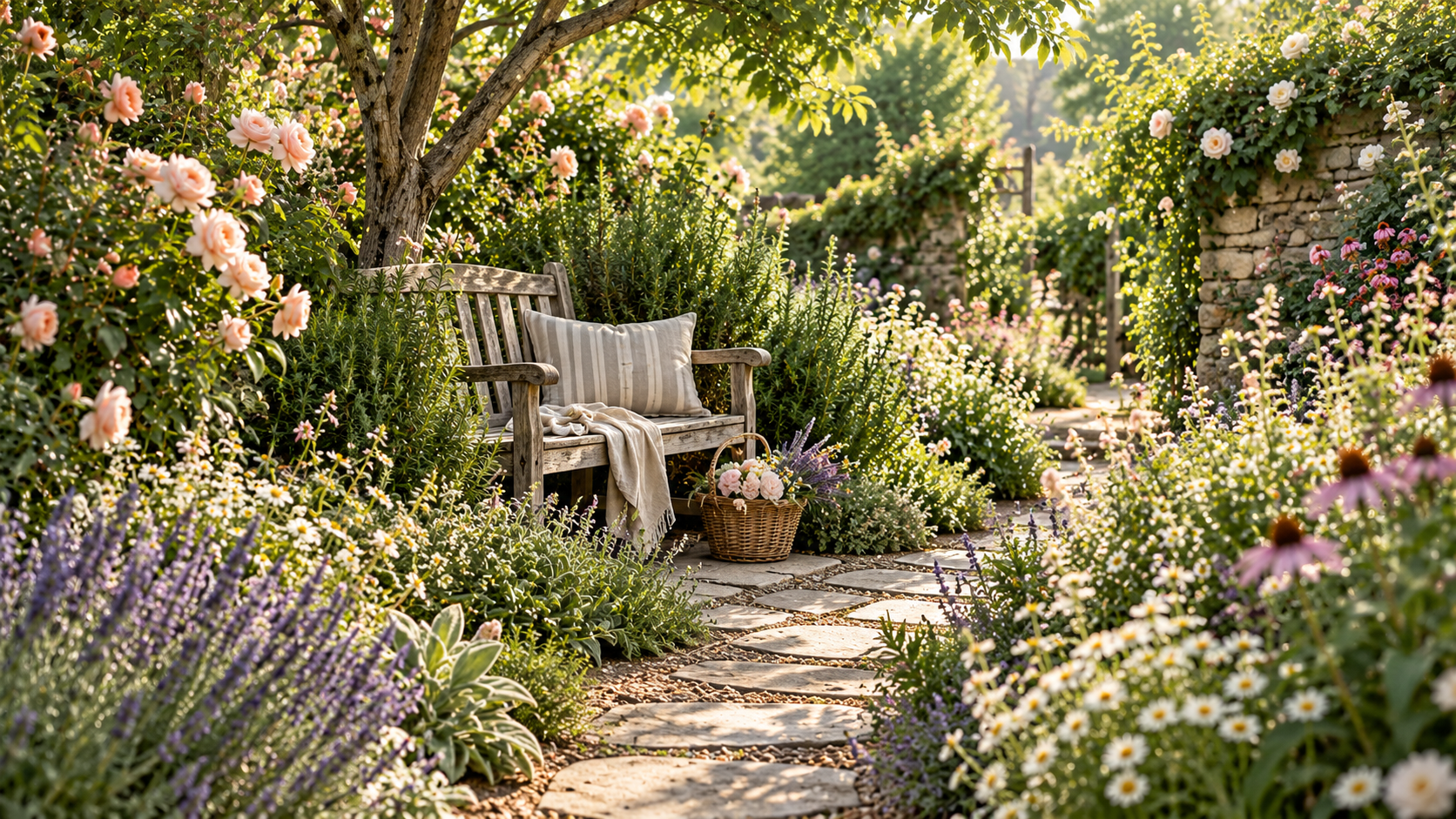
Lavender brings fragrance and beautiful purple flowers. Rosemary offers evergreen structure and aromatic foliage. Thyme can soften the edge of a path or spill over the side of a container. Sage adds lovely leaf texture and muted color.
Each of these plants can contribute to the design of a garden while also offering something we can gather and enjoy.
That's what I find so appealing about the idea.
The plants have a purpose beyond their appearance, but their beauty is still part of the experience.
Start With What You Love to Use
If you're thinking about creating an apothecary garden, I wouldn't begin by making a long list of every herb or flower you could possibly grow.
I'd start with a much simpler question:
What would I actually enjoy using?
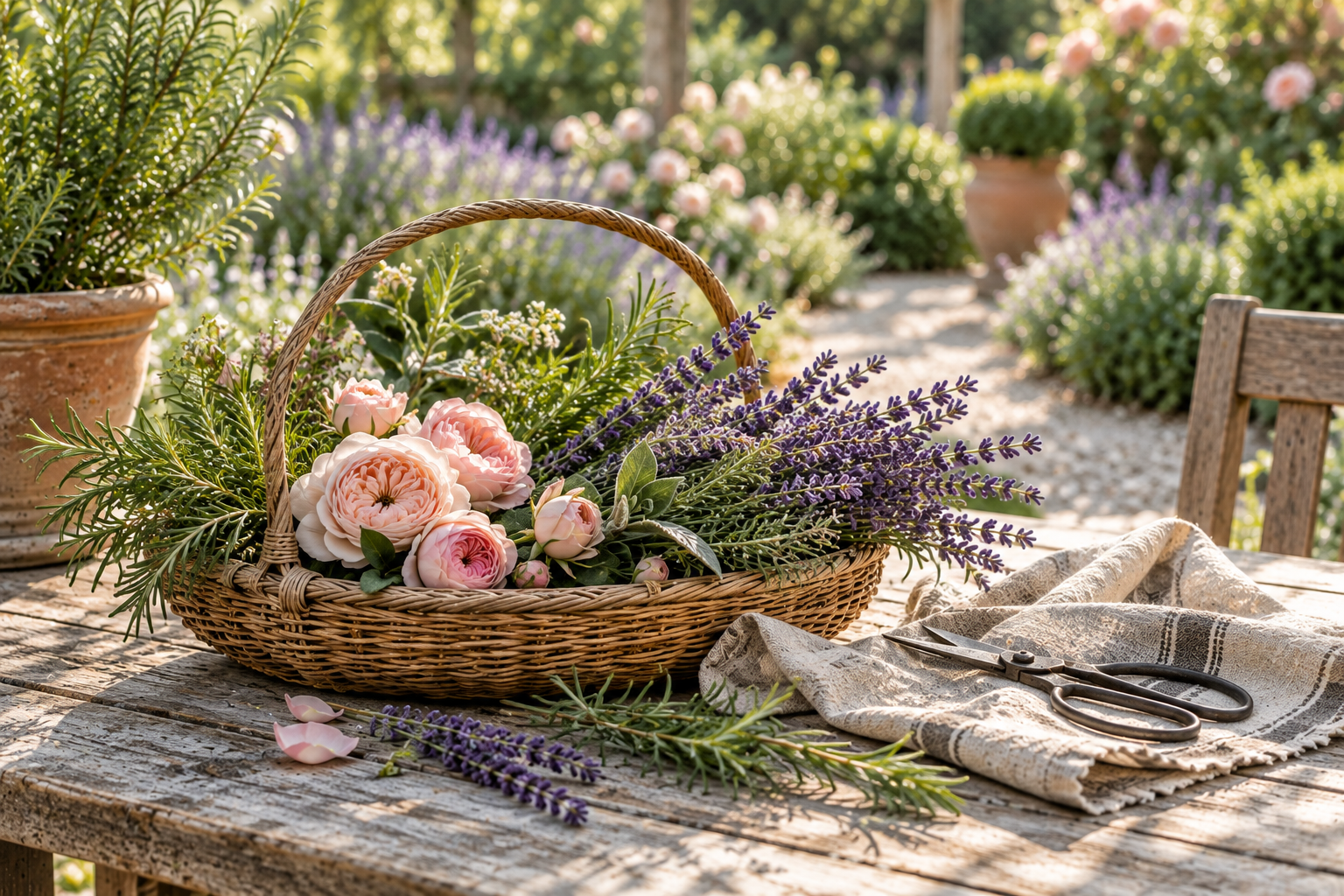
Do you love cooking with fresh rosemary or thyme? Would you enjoy gathering lavender for small dried bundles? Do you like bringing flowers indoors? Are there fragrant plants you'd love to have near a favorite sitting area?
Your answers can help guide your plant choices.
A garden filled with plants you genuinely enjoy is much more likely to become part of your daily routine than one created from a list of things you feel you should grow.
And you don't need dozens of varieties to make it worthwhile. A handful of carefully chosen plants can be a wonderful place to begin.
Of course, it's important to choose plants suited to your climate, soil, and sunlight. Not every traditional apothecary plant will thrive in every garden, and some plants have safety concerns when used in food or homemade preparations.
But that's another reason to begin with a few familiar favorites and learn about them as you go.

Design Your Apothecary Garden Where You'll Enjoy It
One of the first things I think about when designing a landscape is how people will move through and use the space.
That same thinking applies to an apothecary garden.
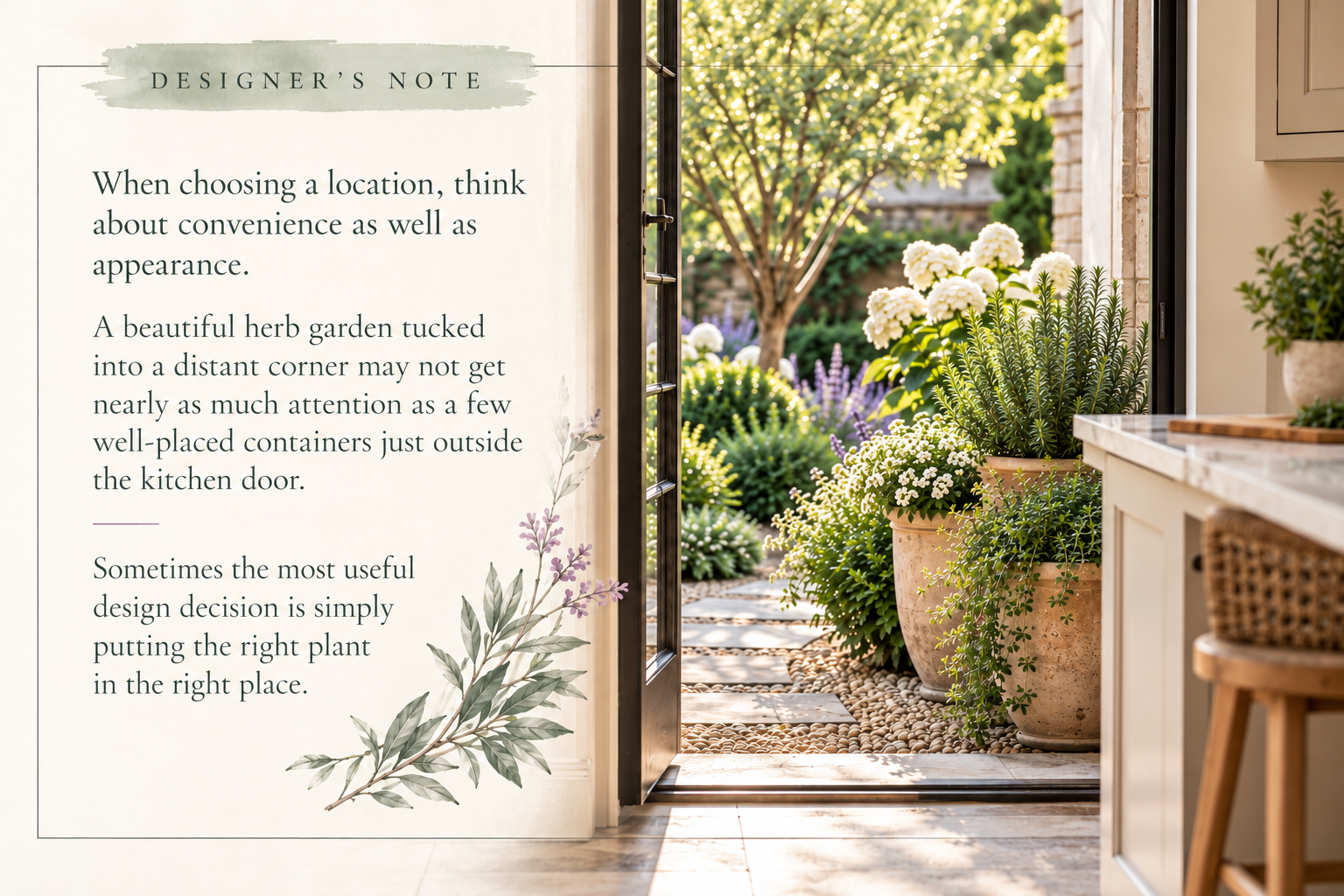
If you love cooking with fresh herbs, consider placing them near the kitchen or along a path you regularly use. If fragrance is what you enjoy most, think about planting aromatic herbs near a seating area, beside a walkway, or in containers close to the door.
The idea is to make these plants easy to enjoy.
Imagine stepping outside to gather a few sprigs of rosemary while preparing dinner. Or brushing against lavender as you walk toward your favorite chair.
Those small moments are part of the garden's design.
I also like the idea of mixing useful plants into existing planting beds rather than feeling that an apothecary garden needs to be a separate, formal space.
A grouping of lavender might look beautiful alongside ornamental grasses. Sage can add soft, silvery foliage among flowering perennials. Creeping thyme may work as a low edging plant in a sunny, well-drained spot with light foot traffic.
The best arrangement depends on the plants' growing needs, but the larger idea is simple:
Place the plants you love to use where you'll naturally enjoy them.
Think About the Garden as a Composition
Even when we're growing plants for a practical purpose, I still want the garden to feel thoughtfully designed.
That means looking beyond individual plants and considering how they work together.
Over the years, I've come to think about planting in three simple layers: Structure, Story, and Stitch.
Structure gives the garden its backbone. In an apothecary-inspired planting, this might include rosemary where it's winter-hardy, compact evergreen shrubs, or other plants that give the space form throughout the year.
Story brings personality through flowers, seasonal color, texture, and movement. Lavender, calendula, and other flowering herbs may become part of this layer, depending on your growing conditions.
Stitch connects everything. Low-growing plants such as thyme can help soften edges and bring the different parts of the planting together.
Not every plant needs to fit neatly into one category. Rosemary, for example, can provide structure, fragrance, and something useful for the kitchen.
That's part of the fun of designing with herbs and useful flowers. They can play more than one role. And just as with any planting design, repetition can help everything feel connected. A few repeated groups of the same herb may create a stronger visual effect than a collection of many different plants scattered throughout the space.

You Don't Need a Large Garden
One of the things I especially like about this idea is how easily it can be adapted to different spaces.
You might create a small herb garden beside the patio, dedicate a raised bed to your favorite useful plants, or tuck a few varieties into an existing perennial border.
And if your outdoor space is limited, containers can be a wonderful solution.
A collection of pots near a sunny door can offer fragrance, texture, and fresh herbs within easy reach. You can group containers of different heights and sizes to create a layered arrangement, just as you would in a planting bed.
The important thing isn't how much space you have.
It's choosing plants you'll enjoy and giving them a place where they can thrive.
The Pleasure of Gathering From Your Garden
There's a certain satisfaction that comes from bringing something you've grown into your home.
Maybe it's a few sprigs of thyme for dinner, lavender gathered for drying, or flowers cut for a small arrangement.
Growing plants with a purpose adds another dimension to gardening. We begin noticing when they're ready to gather, how their fragrance changes, and the different ways we can enjoy them throughout the season.
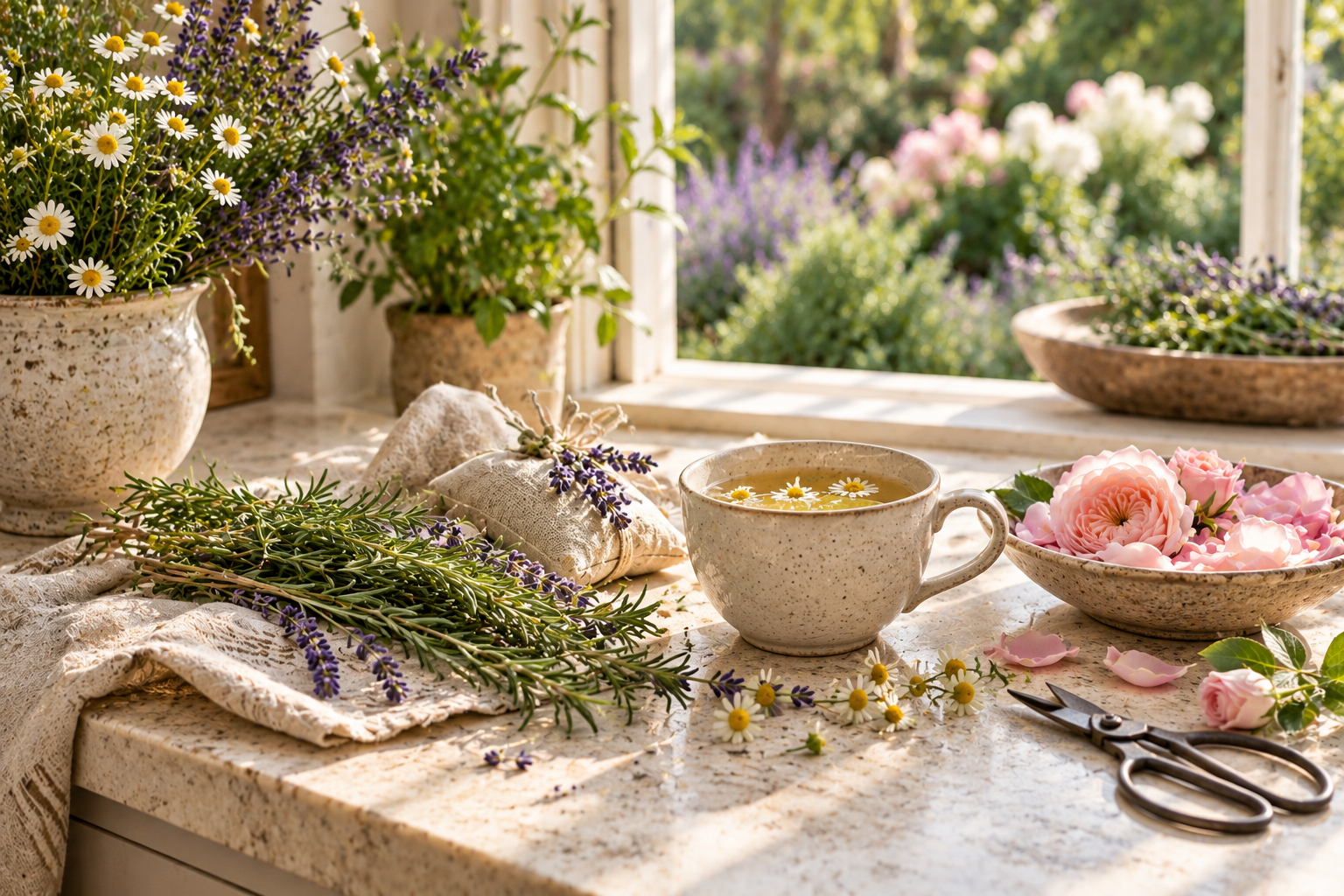
Some herbs can be dried and stored for later use. Others are best enjoyed fresh. And some flowers are simply lovely to gather and display.
Of course, it's important to identify plants correctly and understand which parts are safe to use before harvesting them for food, tea, or other preparations. Traditional uses don't always mean a plant is safe for everyone.
But with familiar, well-chosen plants and a little knowledge, gathering from the garden can become one of those simple routines we look forward to. And I think that's part of what makes an apothecary garden so appealing.
It gives us another reason to step outside, slow down, and notice what's growing.
A Garden That Becomes Part of Your Everyday Life
We often think about garden design in terms of how a space looks.
The shape of the planting beds. The colors of the flowers. The paths, patios, and places to sit.
And all of those things matter.
But I also like to think about what happens after the garden is planted.
Will you walk through it on your way to the kitchen? Will you stop to smell the lavender? Will you gather herbs for dinner or cut a few flowers to bring inside?
Will the garden give you little reasons to enjoy it throughout the day?
That's where a beautiful landscape becomes something more personal. An apothecary garden doesn't have to be large, formal, or filled with unusual plants. It can begin with a few favorites you love to grow, gather, and enjoy.
Sometimes the most meaningful gardens aren't just the ones we admire. They're the ones that become part of our everyday lives.
Continue Exploring: The Garden Apothecary Guide
If the idea of growing a garden you can gather from appeals to you, I've created a Garden Apothecary Guide to help you explore it further.
Inside, you'll find inspiration for choosing useful herbs and flowers, a brief introduction to collecting and drying your harvest, and a few simple recipes to try along the way.