

Have you ever walked into a garden and felt that everything just seemed to belong? There might be a wonderful mix of flowering plants, trees, shrubs, and interesting textures. Maybe there's a winding path, a cozy place to sit, or several different garden areas to explore. Yet somehow, all those different pieces feel connected. It's something I notice when visiting gardens, and it's one of the things I think about when designing a landscape.
What creates that feeling? Often, it isn't one dramatic feature or an elaborate planting design. It's the smaller choices that quietly connect one part of the garden to another.
A repeated plant. A familiar shape. A material that appears in more than one place.
These little connections help the garden feel like one beautiful space rather than a collection of separate ideas. And the good news is that you don't need to redesign your entire landscape to begin noticing them.
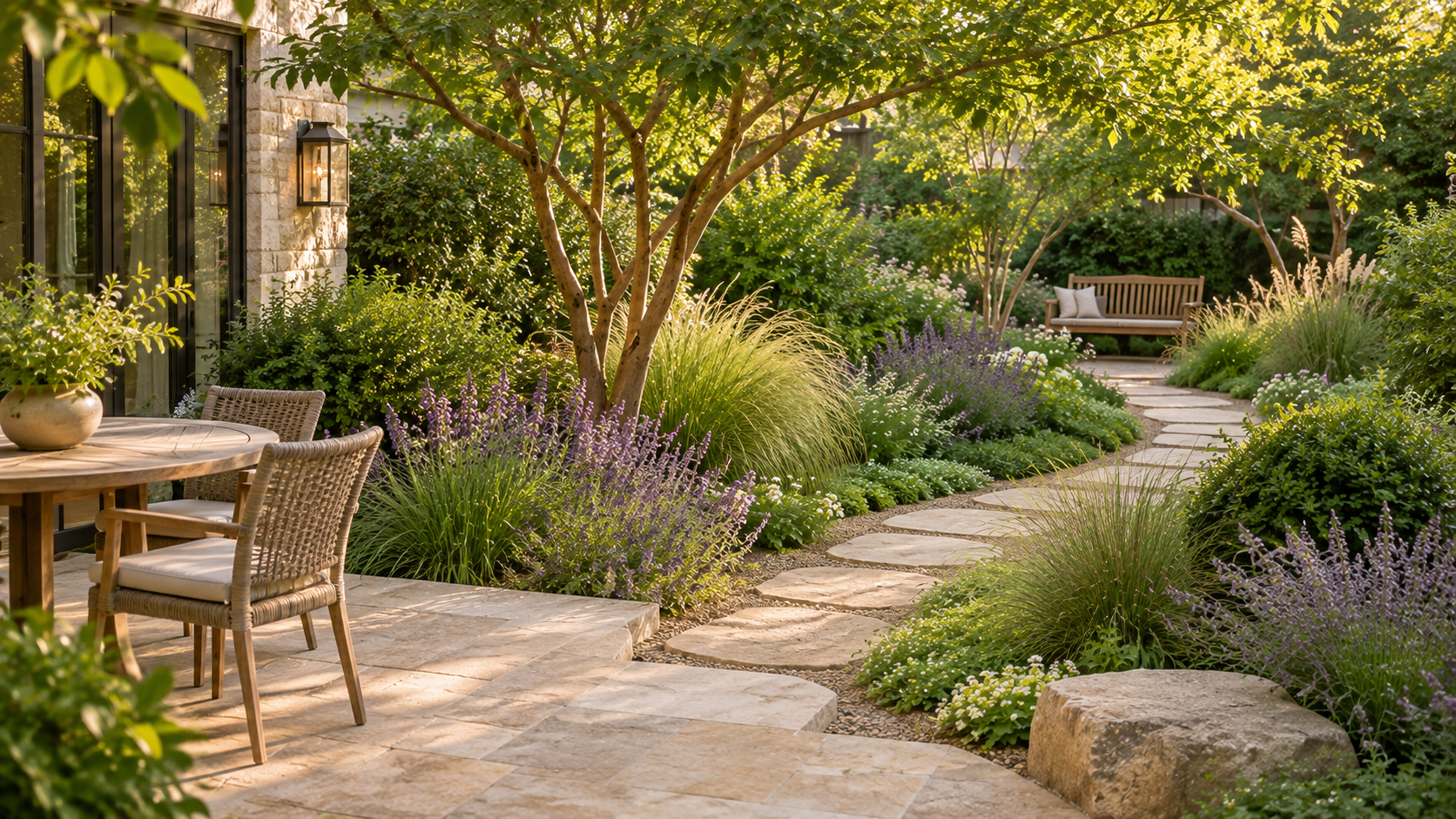
A Garden Doesn't Have to Match to Feel Connected
When we talk about creating harmony in a garden, it's easy to imagine everything looking the same. The same plants repeated in every bed. The same colors throughout the landscape. Perfectly matching pots, edging, and garden furniture. But that's not what I mean by a connected garden.
Some of the most inviting landscapes I've seen have a wonderful mix of plants and materials. They're filled with personality, seasonal changes, and little surprises. What makes them work is that the different elements share something in common.
Perhaps the same soft green foliage appears in several places. Maybe a natural stone used along a path is repeated near a seating area. Or a favorite flowering plant shows up just often enough to create a familiar rhythm. These connections don't have to be obvious. In fact, I think some of the most successful ones are the details we notice without even realizing why they feel right.
Repetition Gives the Eye Something Familiar
One of the simplest ways to bring a garden together is through repetition. Imagine walking along a garden path and seeing a beautiful group of ornamental grasses. A little farther along, you notice the same grasses beside a seating area. Then, near the patio, another small grouping appears.
Each planting is a little different, but the repeated grasses create a connection between the spaces. Your eye recognizes something familiar.
And that familiarity helps the garden feel more connected. The same idea works with flowering perennials, evergreen shrubs, and even trees. You don't need to repeat everything. In fact, repeating just a few carefully chosen plants can be more effective than trying to carry every plant throughout the garden.
I often think of repetition as a way of creating rhythm. Just as a familiar pattern in music helps tie different parts of a song together, repeated plants can help guide our eyes through the landscape. And repetition doesn't have to mean planting everything in neat rows or identical groups. A relaxed garden can use generous drifts, loose clusters, and natural-looking arrangements while still creating a beautiful sense of rhythm.
The goal isn't to make every part of the garden look alike. It's to give the different parts something in common.
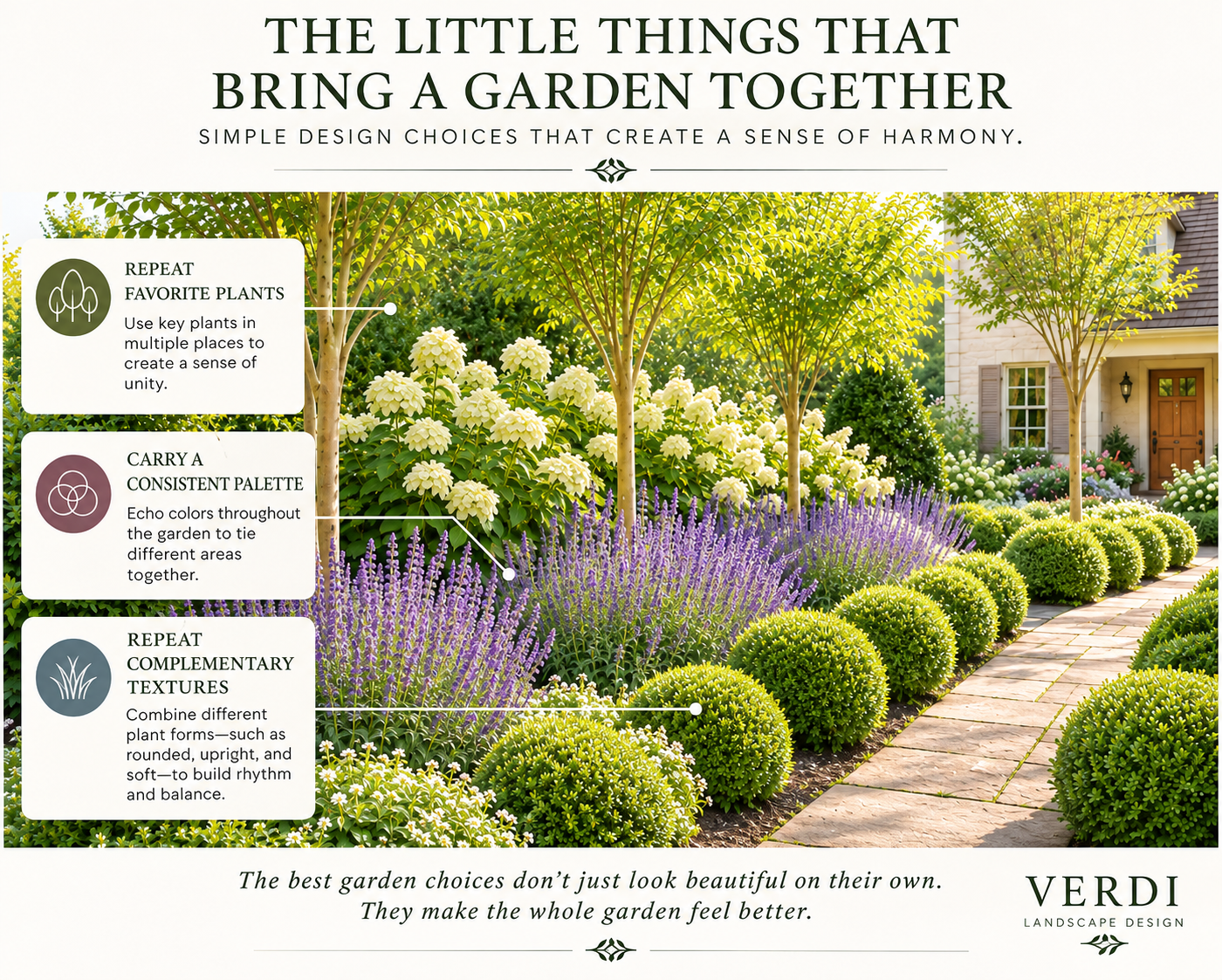
Let Shapes Create a Connection
Plants aren't the only things that create visual connections. Shapes can do it, too. Think about the rounded form of a favorite shrub. That same gentle curve might appear in the edge of a planting bed, the shape of a patio, or the outline of a garden path. Those repeated forms help the landscape feel intentional.
Straight lines can create a similar connection. A rectangular patio might relate beautifully to a series of simple planting beds or a straight garden walkway. The forms don't need to be identical, but they can share a sense of order. When I'm designing a landscape, I pay attention to these relationships because they help create a natural flow between different spaces.
Sometimes a garden has several wonderful features that feel unrelated simply because their shapes don't seem to speak to one another. Finding a common form can help. And it doesn't require everything to become perfectly symmetrical or formal. Even a naturalistic garden can have a quiet sense of order beneath all those soft, flowing plants.
Carry Materials From One Space to Another
Another way to connect a landscape is through the materials we choose. Stone, gravel, brick, wood, and other hardscape materials all have their own colors, textures, and character. When a material appears in more than one part of the garden, it can help those areas feel related.
For example, a natural stone used for a garden path might appear again as a small landing near a bench. A warm-toned brick edging could connect a planting bed with a nearby patio. Or the same gravel might be used in several informal garden spaces. The materials don't always have to be exactly the same. Sometimes it's enough to repeat a similar color, texture, or finish.
I especially like how natural materials can create a sense of connection without drawing too much attention to themselves. A stone path, a few well-placed boulders, and a simple gravel sitting area can all feel like they belong together when their colors and textures relate. It's a subtle detail, but one that can make a big difference in how the whole garden feels.
Use Color as a Common Thread
Color is often one of the first things we notice in a garden. And with so many beautiful flowering plants available, it's easy to imagine a garden filled with every color we love. But creating a sense of connection doesn't mean limiting yourself to just one or two flower colors.
Instead, think about how certain colors can appear throughout the landscape. Maybe soft purple flowers show up in several planting areas. Perhaps warm yellow blooms are repeated near the entry, along a path, and beside the patio. Those little echoes of color help the garden feel connected, even when the surrounding plants are different.
Foliage color matters, too. The deep green of evergreen shrubs, the silvery leaves of certain perennials, or the warm tones of ornamental grasses can create connections that last beyond the flowering season. And sometimes the most helpful color in a garden is simply green.
Green foliage can give our eyes a place to rest between more colorful plantings, allowing the flowers and textures to stand out without everything competing for attention. The idea isn't to create a strict color scheme. It's to notice which colors you love and find thoughtful ways to let them appear throughout the garden.
Think About How You Move Through the Garden
A connected garden isn't just about what we see. It's also about how we experience the space as we move through it.
A path might lead from the patio to a quiet seating area. A familiar planting might appear along the way. A beautiful tree could draw our attention toward another part of the landscape. These details help create a sense of flow.
When I design garden spaces, I like to think about what someone will see as they walk from one area to another. What catches their eye? What encourages them to keep exploring? And what helps the next space feel like a natural part of the journey? Sometimes it's a repeated plant or a familiar material.
Other times, it's a view that connects two different garden areas. For example, a flowering shrub near the patio might be echoed by another planting farther down the garden. Even though the spaces are separated, that familiar color or form helps create a visual relationship.
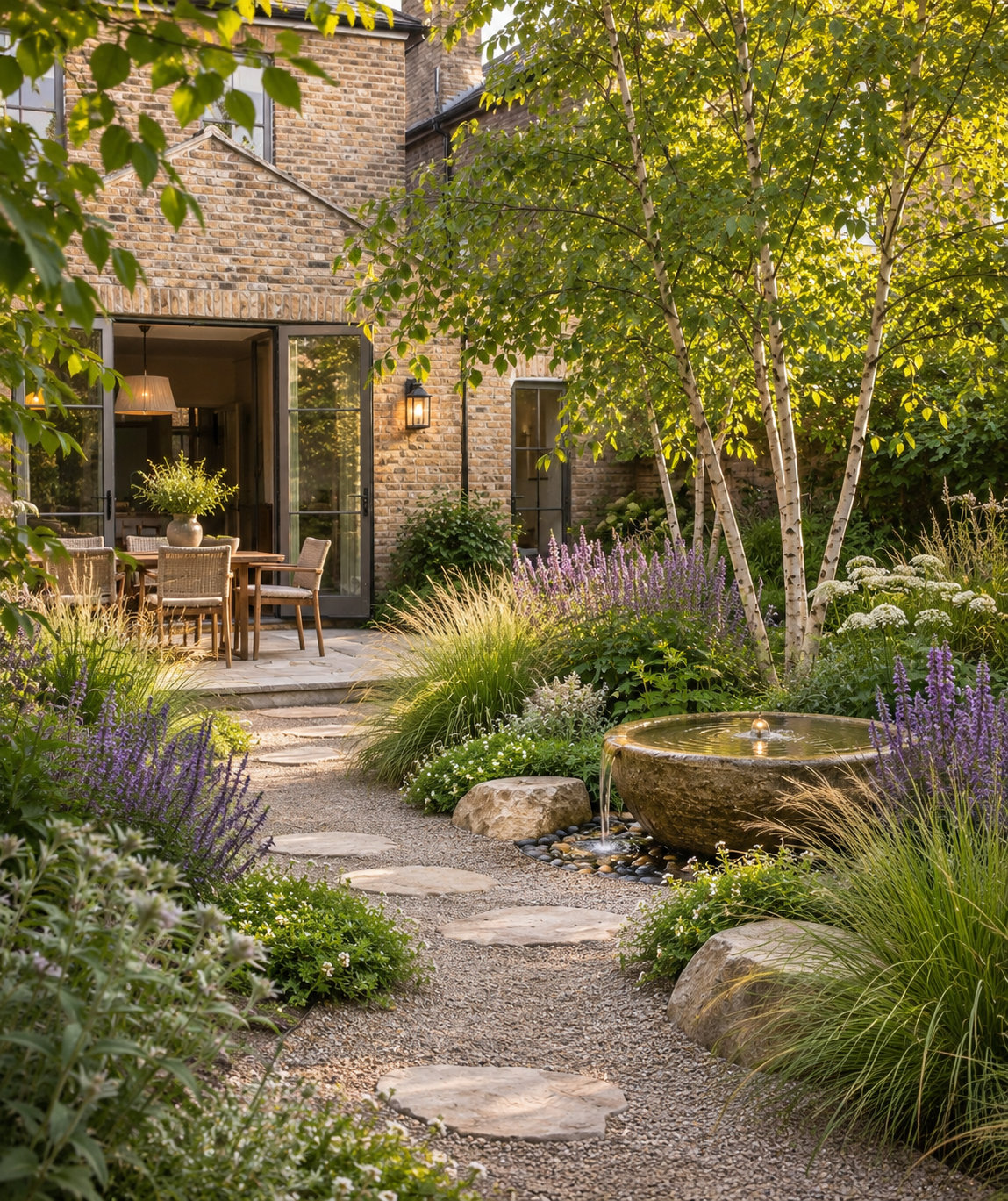
This is one reason I think it's helpful to look at a garden from several different viewpoints. Stand at the back door. Walk along the path. Sit in your favorite chair. Notice what you see from each place and how the different parts of the garden relate to one another. You may begin to discover connections you hadn't noticed before.
Give the Garden a Little Breathing Room
Here's something else I've learned over the years: the spaces between plants and garden features matter just as much as the plants themselves. A stretch of lawn, a simple gravel path, or a quiet area of low green planting can give our eyes a place to rest. These open spaces help us appreciate the more detailed parts of the garden.
Think about a beautiful flowering border beside a simple lawn. The lawn provides a calm foreground that allows the flowers to stand out. Or imagine a group of sculptural trees rising above a soft carpet of groundcover. The quieter planting helps us appreciate the shape and character of the trees. Not every part of a garden needs to be filled with color or texture.
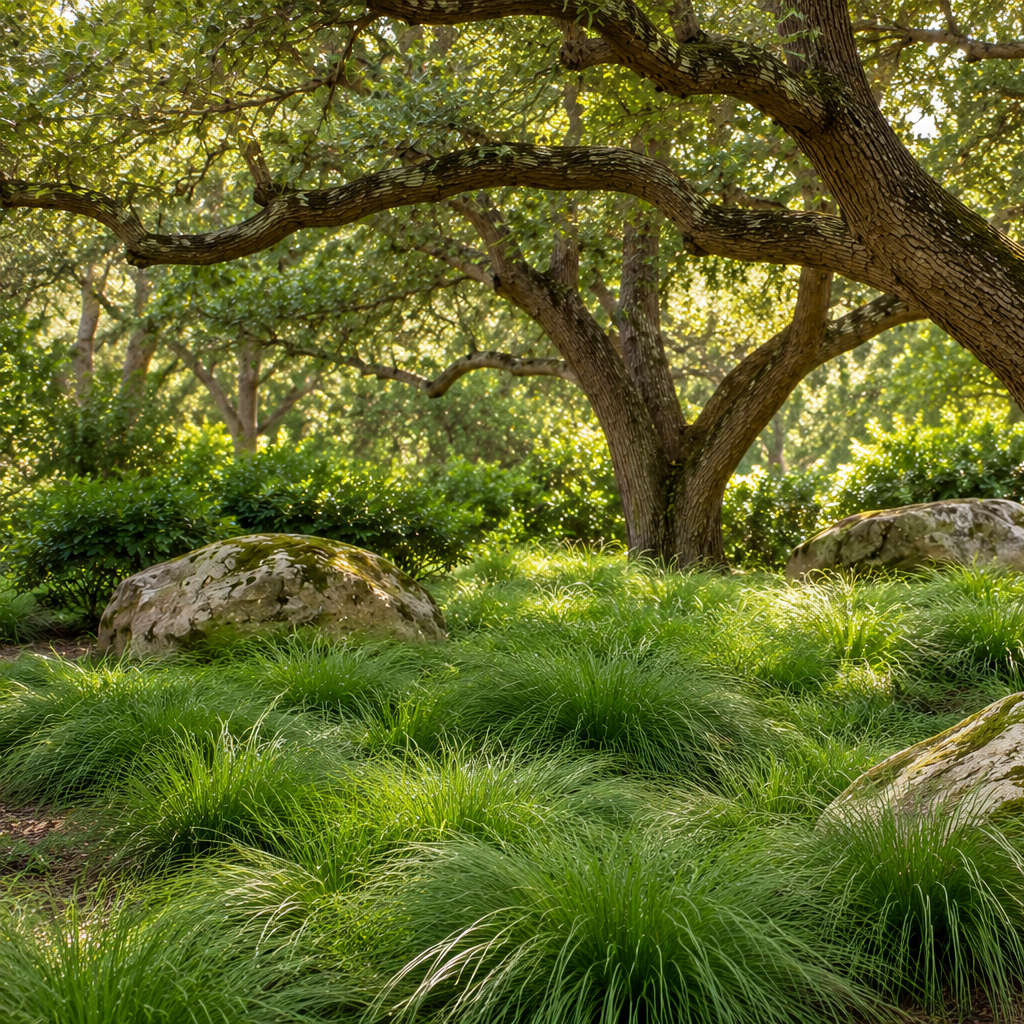
Sometimes the simplest spaces are what make the more interesting ones feel special. And that brings us back to November's idea of making room for what belongs. Creating a connected garden isn't always about adding another plant or feature. Sometimes it's about giving the things we already love enough space to be appreciated.
Three Things to Notice in Your Own Garden
If you'd like to explore this idea in your own landscape, here's a simple place to begin.
1. Look for something worth repeating.
Is there a plant, color, or material you especially love? Think about whether it could appear in another part of the garden to create a sense of connection.
2. Notice the shapes around you.
Look at the curves of your planting beds, the lines of your paths, and the forms of your favorite plants. Are there shapes that could be echoed elsewhere?
3. Follow the view.
Walk through your garden and notice what catches your eye. Look for opportunities to create little visual connections between the spaces you use and enjoy.
You don't have to make any changes right away. Sometimes simply noticing these relationships is enough to help you see your garden in a new way. And once you begin looking for them, you'll start recognizing the same ideas in other gardens you admire.
It's the Connections That Make the Difference
One of the things I love about garden design is that so much of its beauty comes from the relationships between things. A flowering plant beside a quiet evergreen. A winding path that leads toward a favorite tree. A familiar color that appears again just around the corner.
Individually, these details may seem small. But together, they create a garden that feels thoughtful, welcoming, and complete. And that's something worth remembering when we're surrounded by so many beautiful plants and garden ideas.
We don't have to include everything we love. We can choose a few things that speak to us, find ways to connect them, and give them room to shine.
Because sometimes the little things that bring a garden together are what make it feel most like home.