

Have you ever walked through a garden center and spotted a plant you just had to have? Maybe it was covered in beautiful flowers, had the most interesting leaves, or was a variety you'd never seen before. Before you knew it, you were imagining where you could plant it. I understand that feeling. Even after years of designing landscapes, I still find myself drawn to plants simply because they're beautiful. And there's nothing wrong with falling in love with a plant.
But one of the things I've learned over the years is that a beautiful plant isn't always the right plant for a particular garden.
Sometimes the plants that make the biggest difference in a landscape aren't the ones that catch our attention first. They're the ones that bring everything else together. So how do we know what truly belongs?
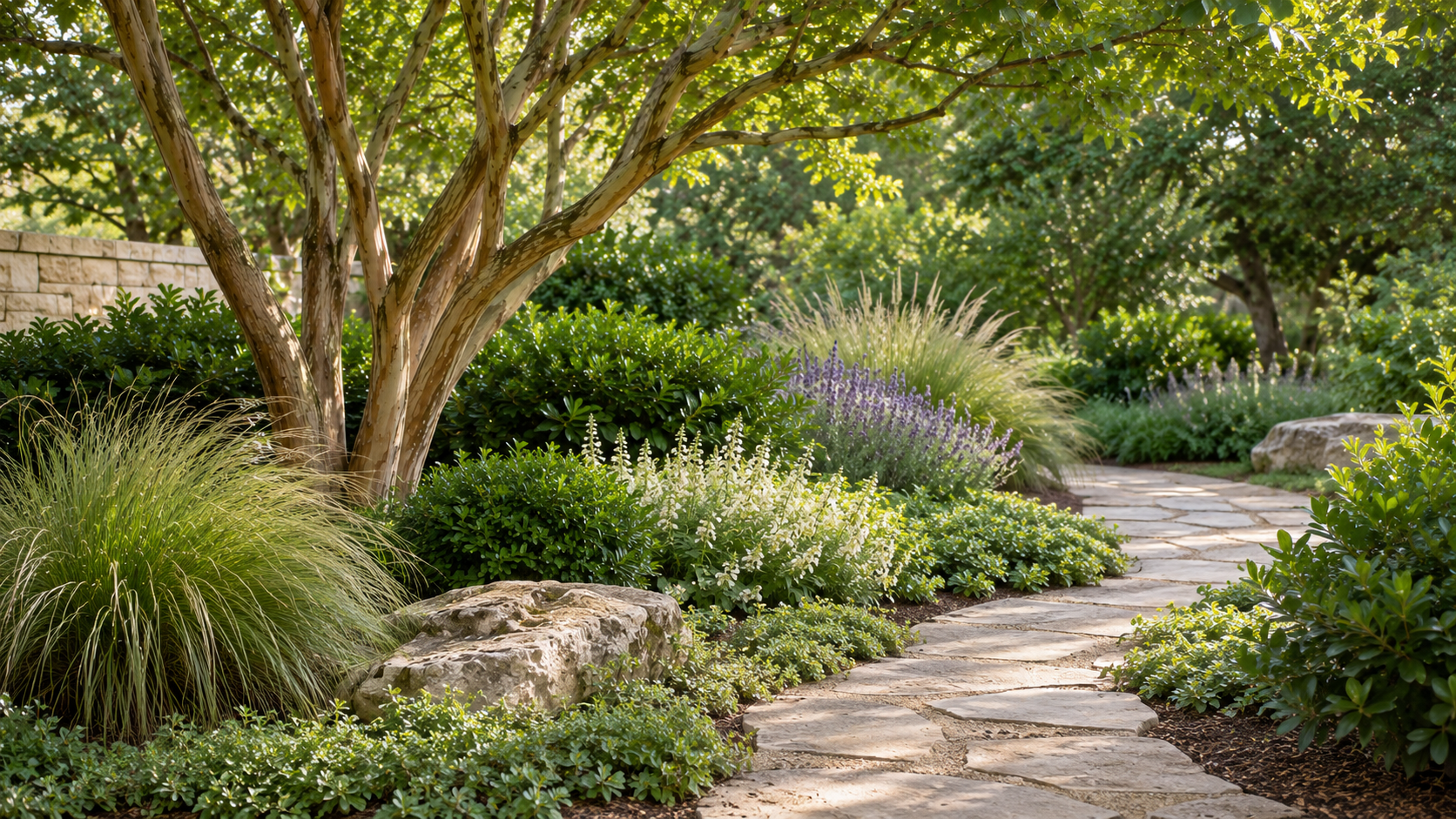
Look Beyond the Plant Itself
When I'm choosing plants for a landscape, I'm not just thinking about how each one looks on its own. I'm thinking about the garden as a whole.
What plants are already growing nearby? What shapes and textures would work well together? How will this plant look from the house or along the garden path? And perhaps most importantly, what will it contribute to the space? A plant might have gorgeous flowers, but if it's placed among several other plants that are all competing for attention, those beautiful blooms may get lost.
On the other hand, a simple evergreen shrub with lovely foliage might be exactly what the garden needs. It can give the surrounding flowers a quiet backdrop and help the entire planting feel more connected. That's one of the interesting things about garden design.
Sometimes the best choice isn't the plant that stands out. It's the plant that helps everything else shine.
Think About the Space the Plant Will Fill
One of the first things I consider when choosing a plant is its mature size. It's easy to fall in love with a small plant at the nursery. But that little shrub or tree may look very different five or ten years from now. Will it have enough room to grow naturally? Will it block a favorite view or crowd a nearby path? Could its branches eventually extend over a walkway or into a neighboring plant?
These aren't reasons to avoid a plant. They're simply things worth thinking about before deciding where it belongs. I also look at the shape of the plant. Some plants grow tall and narrow. Others spread wide, form rounded mounds, or have loose, arching branches. Those shapes can make a big difference in how a garden feels.
A tall, upright plant might help frame an entrance or draw the eye toward a focal point. A rounded shrub can soften the edge of a planting bed. A plant with graceful, arching stems might bring movement to a space filled with more structured forms. When you begin looking at plants this way, you start to see them as more than individual flowers or shrubs. You begin to see how they help shape the garden.
Notice What the Garden Already Has
Before adding something new, I like to look at what's already working. Maybe there's a beautiful tree that gives the garden its character. Perhaps a group of evergreen shrubs provides a strong foundation, or a favorite perennial creates a lovely moment of color each spring. Those existing plants can help guide what comes next.
For example, if a planting bed already has several bold, colorful flowers, it might benefit from something with quieter foliage. If the garden is filled with low, rounded plants, a few taller forms could add interest and variety. And if there's a plant you particularly love, repeating it in another part of the garden might create a stronger sense of connection than introducing something completely different. This is where garden design becomes less about collecting individual plants and more about building relationships between them. You don't have to start over or change everything. Sometimes one thoughtful addition is all it takes to make an existing planting feel more complete.
When the Trees Are the Stars
I remember working on a shady garden with a beautiful grouping of mature oak trees. Those trees were already the stars of the landscape, and I wanted the planting beneath them to complement their natural beauty rather than compete for attention.
Instead of choosing bold-leaved shade plants like split-leaf philodendron or Variegated Dianella, I selected Berkeley sedge and planted it in generous masses among moss-covered boulders.
The sedge's fine texture and soft, flowing form created a quiet carpet of green, while the boulders brought a sense of age and permanence to the space. Together, they gave the garden a peaceful, natural feeling without drawing attention away from the oaks. It wasn't that the bolder plants wouldn't have been beautiful. They simply would have created a different experience.
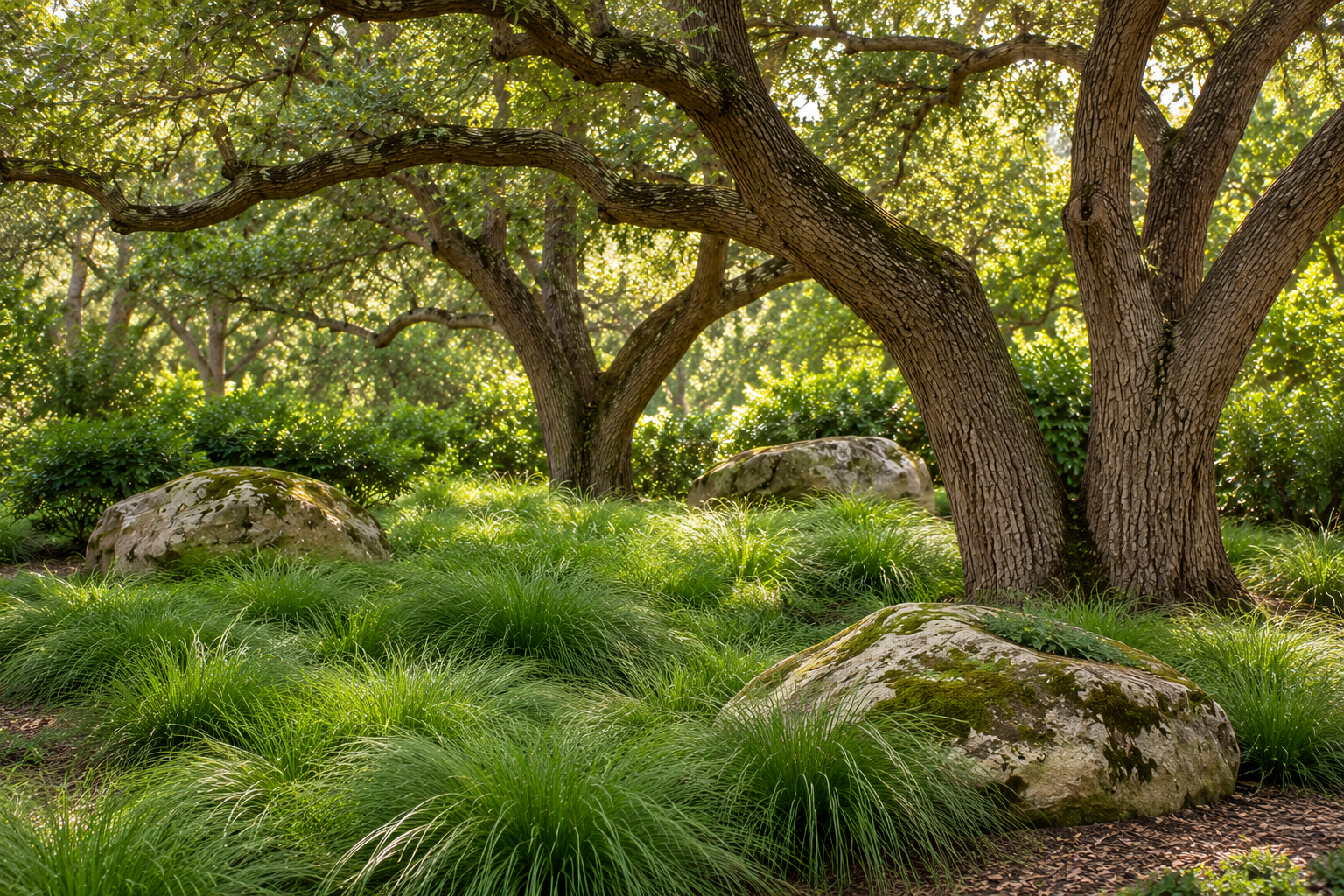
In this garden, the most important design decision was recognizing what was already special and choosing plants that allowed it to shine.
That's something I think about often when designing landscapes. Not every plant needs to make a statement. Sometimes its greatest contribution is helping us appreciate everything around it.
Give Every Plant a Role
When I'm designing a planting, I often think about three layers: Structure, Story, and Stitch.
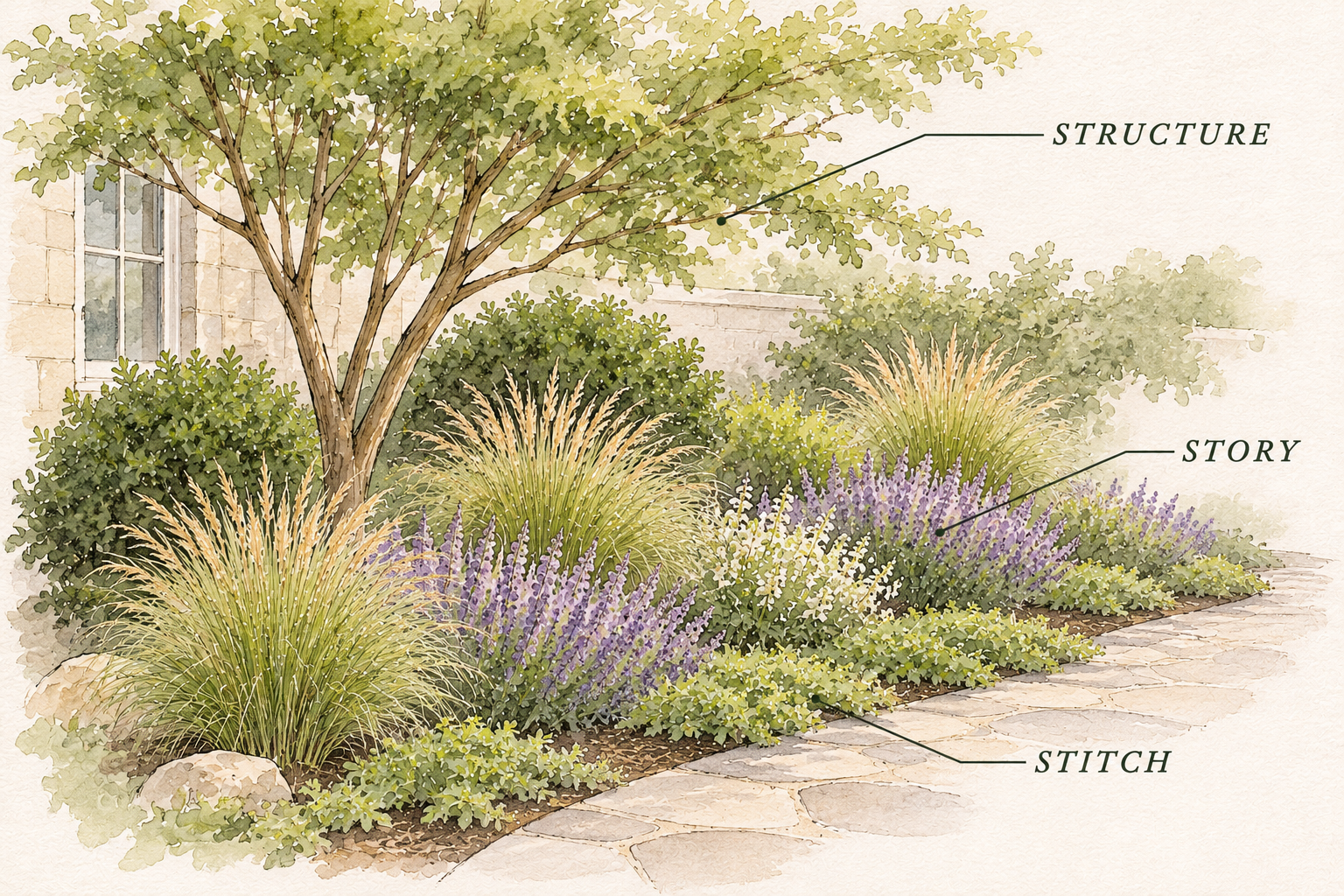
It's a simple way to understand how different plants can work together.
Structure gives the garden its backbone. Trees, evergreen shrubs, and other strong plant forms help define the space and provide interest throughout the year.
Story brings personality. These are the flowers, perennials, ornamental grasses, and seasonal changes that make a garden feel alive.
Stitch connects the planting. Low-growing plants and groundcovers soften edges, fill spaces, and help the different layers feel like they belong together.
Not every plant fits into just one category, and that's perfectly fine. The important thing is to recognize that different plants have different jobs. A garden filled entirely with showy flowers might be exciting during peak bloom, but it can feel less connected when those flowers fade. Adding structure and softer connecting plants can help create a more balanced composition. So when you're considering a new plant, try asking:
What role would this plant play in my garden?
Maybe it adds height, brings seasonal color, softens an edge, or provides a backdrop for something you already love. Having a clear purpose doesn't make the garden less creative. It helps the creativity come together.
Beautiful Is Only Part of the Picture
Of course, a plant also needs to be happy where it's growing. A sun-loving plant won't thrive in a shady corner simply because its flowers would look beautiful there. And a plant that needs excellent drainage may struggle in a spot where water tends to collect. That's why I always consider the growing conditions along with the design. How much sunlight does the area receive? What is the soil like? Does the space stay moist, or does it dry out quickly? How much care will the plant need as it matures? I also think about the seasons.
Will the plant provide interest for only a few weeks, or does it have something to offer at other times of year? Beautiful foliage, interesting branches, seed heads, or evergreen structure can all contribute to the garden long after the flowers are gone. Choosing plants that suit the space and the care you're comfortable giving them is one of the best ways to create a garden you'll enjoy for years to come. And sometimes that means admiring a beautiful plant at the nursery and deciding it would be happier somewhere else. There will always be another beautiful plant to discover!
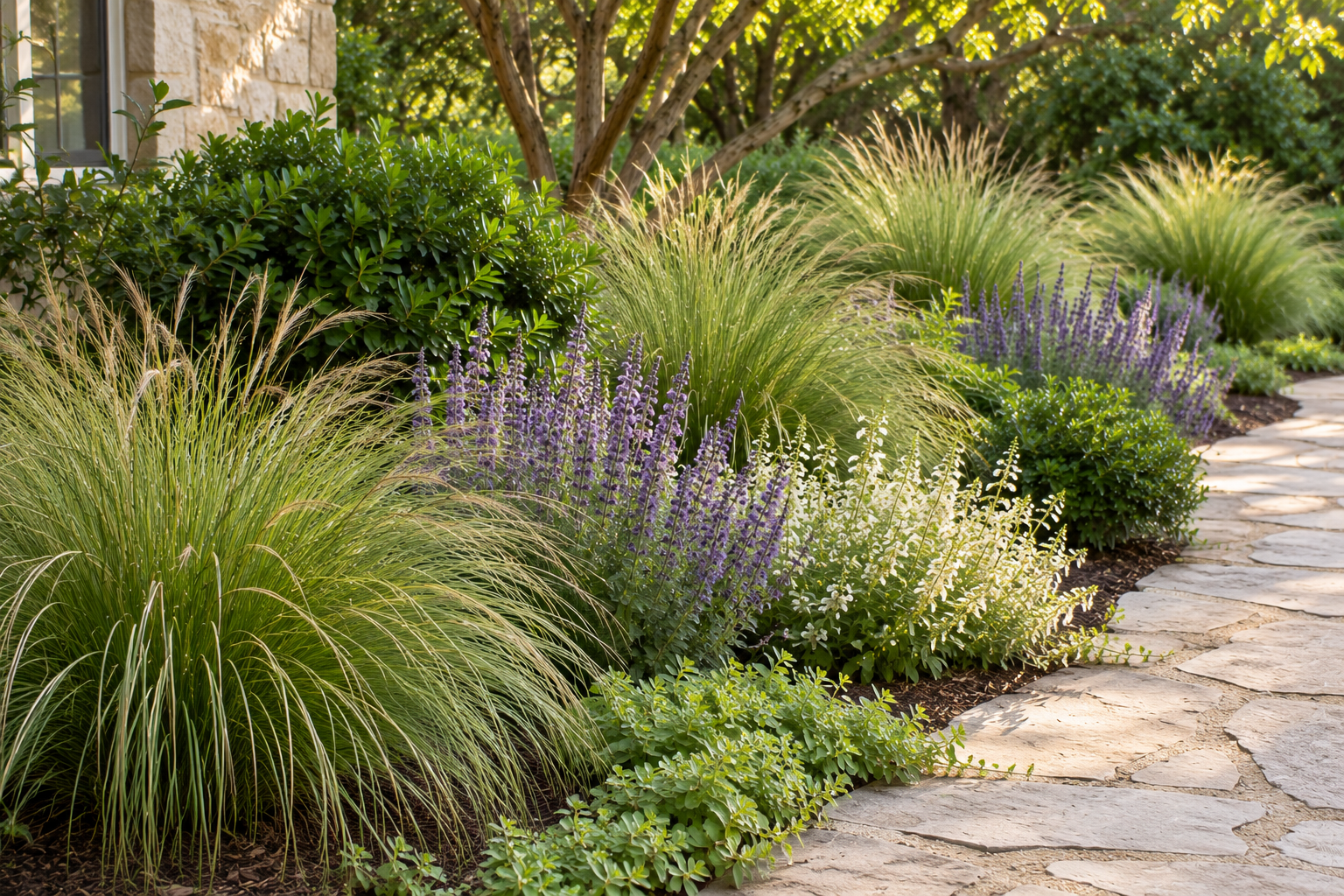
A Simple Way to Decide What Belongs
The next time you find a plant you love, take a moment to imagine it as part of your garden rather than as something standing alone.
Here are five questions I find helpful:
1. Does it suit the growing conditions?
Consider sunlight, soil, drainage, and your local climate. A plant that thrives in its location has a much better chance of becoming a lasting part of the garden.
2. Will it have enough room to grow?
Look beyond the size of the plant today and think about its mature height and spread.
3. What will it add to the design?
Does it bring structure, color, texture, movement, or a softer transition between other plants?
4. How will it relate to what's already there?
Think about the shapes, colors, and textures around it. Will it create a pleasing contrast or repeat something that helps connect the planting?
5. Will I enjoy it where it's planted?
Consider how you'll see and experience the plant. A favorite flowering shrub near a window or a fragrant herb beside a path may bring you more pleasure than the same plant tucked into a distant corner.
You don't need a perfect answer to every question. The idea is simply to look at the bigger picture before making your choice. Over time, this becomes a natural part of how you see your garden.
Making Room for What Matters Most
I think one of the most enjoyable parts of gardening is that there's always something new to discover. A beautiful plant. An inspiring garden. A fresh idea we'd love to try. And there's certainly room for curiosity and a little experimentation. Some of our favorite garden discoveries begin that way. But I've also learned that a garden doesn't need every beautiful plant to feel complete.
It needs plants that suit the space, work well together, and contribute to the experience we want to create. Sometimes that means choosing a simple shrub over another colorful perennial. Sometimes it means repeating a plant you already love. And sometimes it means leaving a little open space so the plants you have can truly shine.
Good garden design isn't about fitting in everything we love. It's about choosing what belongs and giving it room to grow.
And that's a lovely thought to carry with us the next time something beautiful catches our eye.