

Design Your Garden From the Inside Out
Why Some of the Most Important Garden Views Begin Inside Your Home
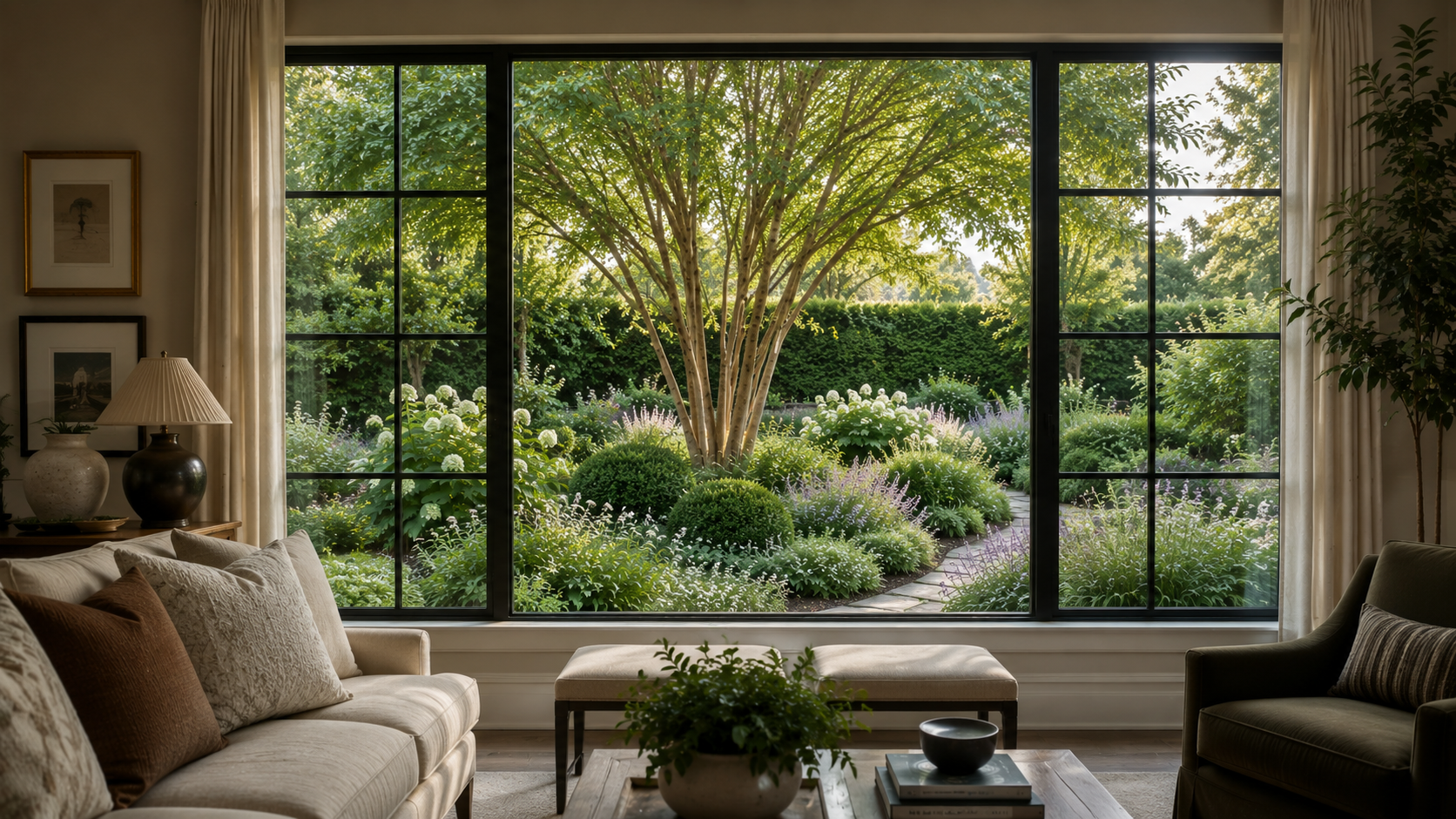
When I visit a client's home for a landscape consultation, some of the most important garden photos I take aren't taken in the garden at all.
I take them from inside the house.
I stand at the kitchen sink.
I look through the dining room windows.
I check the view from the sofa.
I look through the doors the family uses every day.
Why?
Because your garden isn't something you experience only when you're standing in it.
You live with the view of it every day.
And those views can tell us a lot about how a garden should be designed.
Your Garden Is Part of Your Home
Think about how often you look outside without even realizing it.
You make your morning coffee and glance through the kitchen window.
You sit down for dinner and notice the evening light filtering through the trees.
You work at your desk and watch birds moving through the shrubs.
You open the back door and get your first glimpse of the garden.
These everyday views matter.
When I'm designing a landscape, I don't want the garden to work only when someone walks outside. I want it to become part of the experience of living in the home.
And that starts by looking from the inside out.
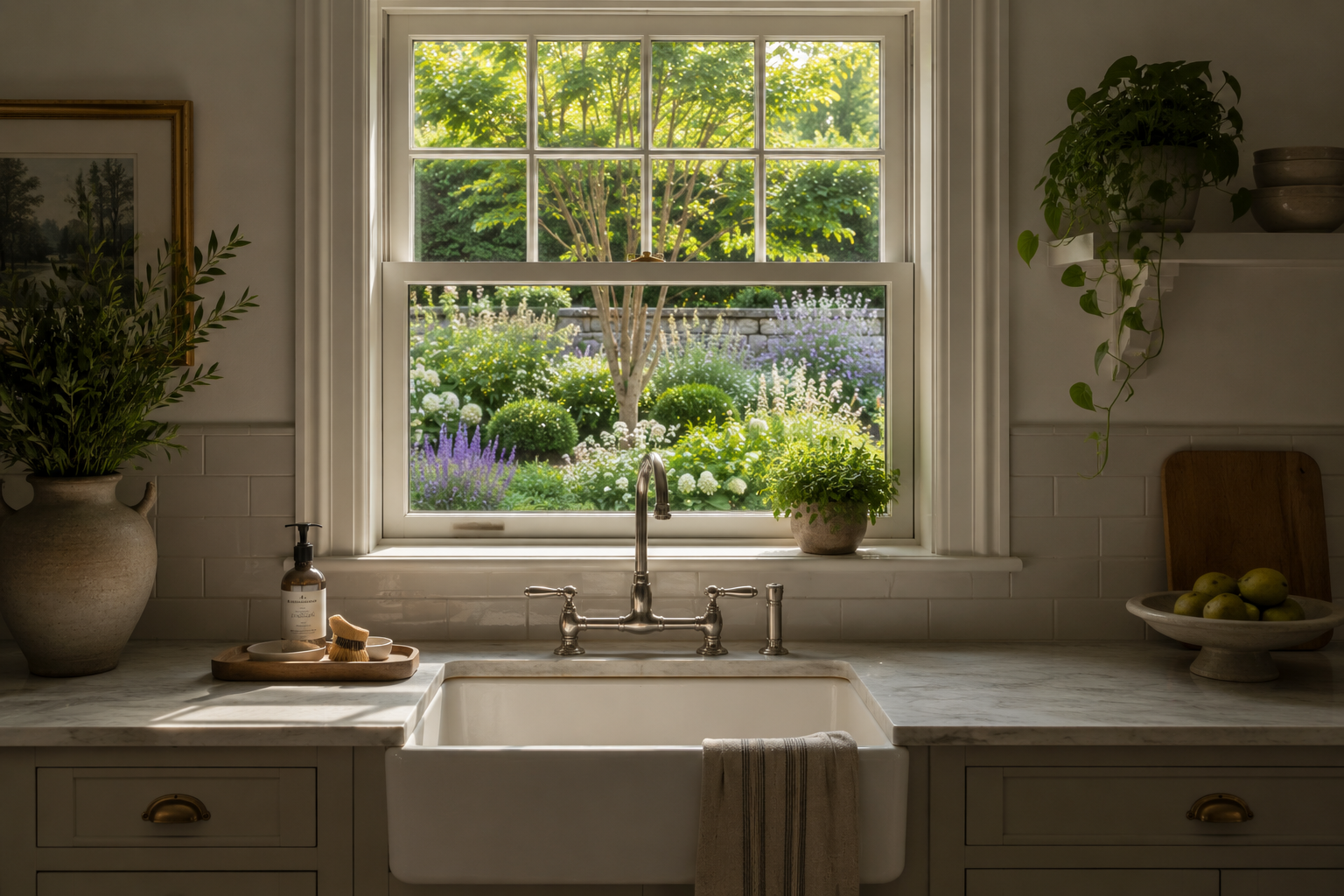
1. Start With the Windows You Use Most
Not every window needs a garden moment.
Start with the places where you spend your time.
Maybe it's the kitchen sink.
Your favorite chair.
The dining table.
A home office.
The doors leading to the patio.
Stand in those places and simply look outside.
What do you see?
More importantly:
Where does your eye naturally go?
You may already have a beautiful view—a mature tree, an interesting plant combination, or a glimpse into another part of the garden.
If so, that's something worth celebrating.
If your eye doesn't land anywhere in particular, you may have just discovered an opportunity.
Designer's Note
When I photograph a client's property, I take pictures from these important indoor viewpoints. It helps me remember that I'm not designing only the garden—I’m designing the view of the garden, too.
2. Think of Your Window as a Picture Frame
Here's a simple way to begin looking at these views differently:
Imagine the window is a picture frame.
What would you like the picture inside it to be?
Maybe it's a beautiful small tree.
A group of ornamental grasses moving in the breeze.
A birdbath surrounded by planting.
A flowering shrub.
A garden bench.
Or perhaps the view is less about a single focal point and more about layers of foliage, texture, and color.
Once you start thinking about the window as a frame, plant placement becomes much more intentional.
Instead of asking:
Where can I fit this plant?
You begin asking:
What do I want to see from here?
That's a very different way to design.
3. Give Your Eye Somewhere to Land
One of the things I look for when studying a view is where the eye naturally comes to rest.
Every view doesn't need a dramatic focal point.
Sometimes a simple plant with a strong form is enough.
A beautifully shaped evergreen.
A multi-stem tree.
A large hydrangea.
A piece of garden art.
The end of a pathway.
The goal isn't to fill the view with more things.
It's to give the eye a reason to pause.
Then the plants around that feature can support it rather than compete with it.
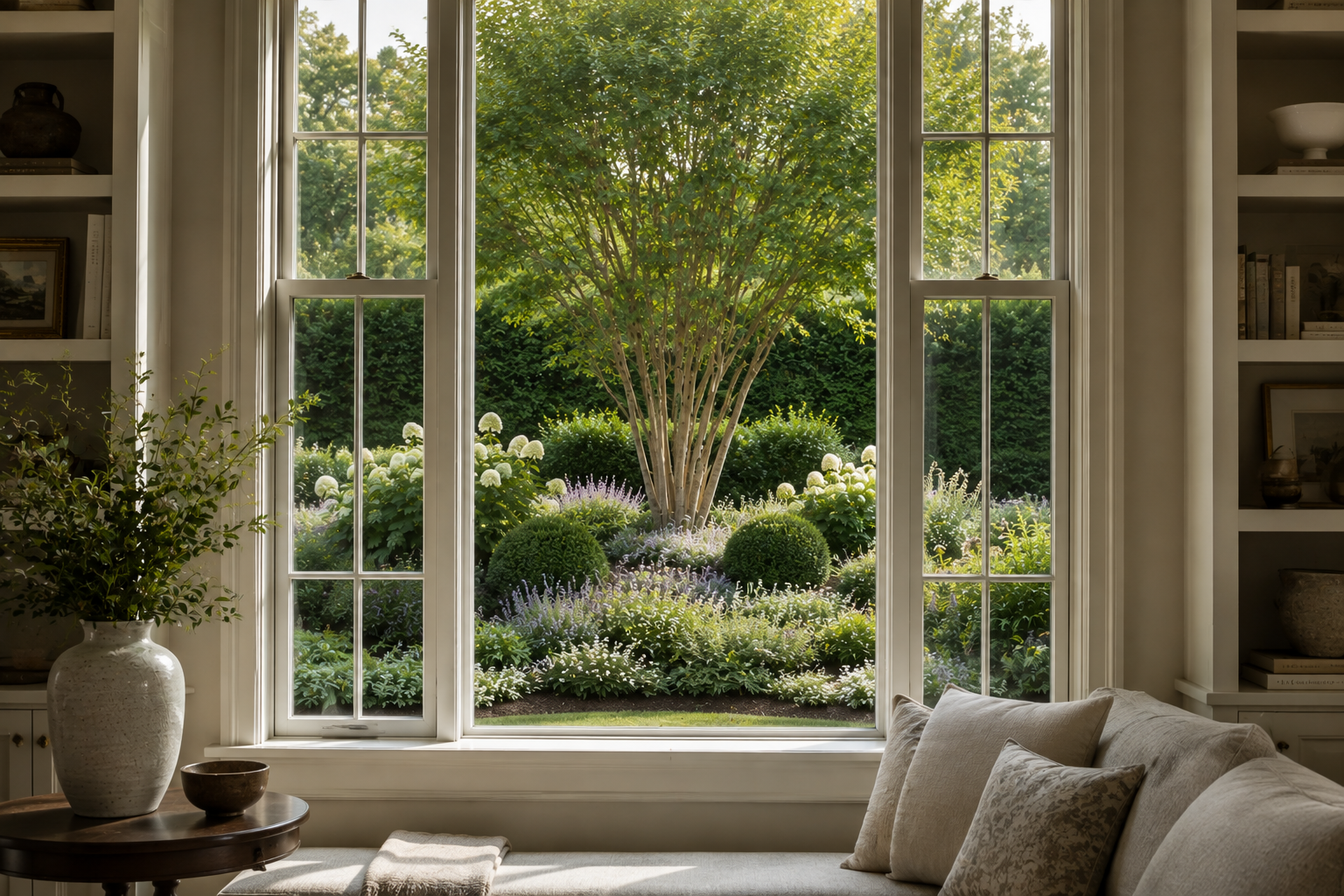
4. Think Beyond Flowers
Flowers are wonderful, but they're only one part of the picture.
If you're designing a garden you will see from inside your home throughout the year, think about what remains when the flowers are gone.
This is where structure becomes especially important.
Trees create silhouettes.
Evergreen shrubs provide mass and color.
Ornamental grasses add movement.
Interesting bark and branching patterns bring character.
Stone, walls, fences, paths, containers, and garden structures can all become part of the composition.
I often think of planting in three layers:
🌿 Structure — the trees, shrubs, and evergreens that form the bones of the garden.
🌸 Story — the perennials, grasses, flowers, and seasonal moments that bring personality and change.
🌱 Stitch — the low plants and groundcovers that soften edges and connect everything together.
When all three are present, the view has something to offer in more than one season.
5. Let Different Rooms Tell Different Stories
One of the most interesting things about designing from inside the house is that the same garden can look completely different from one room to another.
The kitchen may look toward a flowering tree.
The dining room may frame a lush planting bed.
The living room may look across the patio toward a quiet evergreen backdrop.
A bedroom window might overlook a softer, more private part of the garden.
These views don't need to be identical.
In fact, I like when they're not.
Each window can reveal a different part of the garden and create its own experience.
One garden. Many views.
That's part of what makes a thoughtfully designed landscape so interesting to live with.
6. Don't Forget the View Through the Door
Windows aren't the only frames in your home.
Doors matter, too.
A glass door or set of French doors can create a strong visual connection between indoors and out.
And unlike a window, a door does something else:
It invites you to enter the garden.
Think about what you see before you ever open the door.
Does a path invite you forward?
Can you glimpse a seating area?
Is there something beautiful in the distance that makes you curious?
A well-considered view through a doorway can make the garden feel like another room waiting just beyond the house.
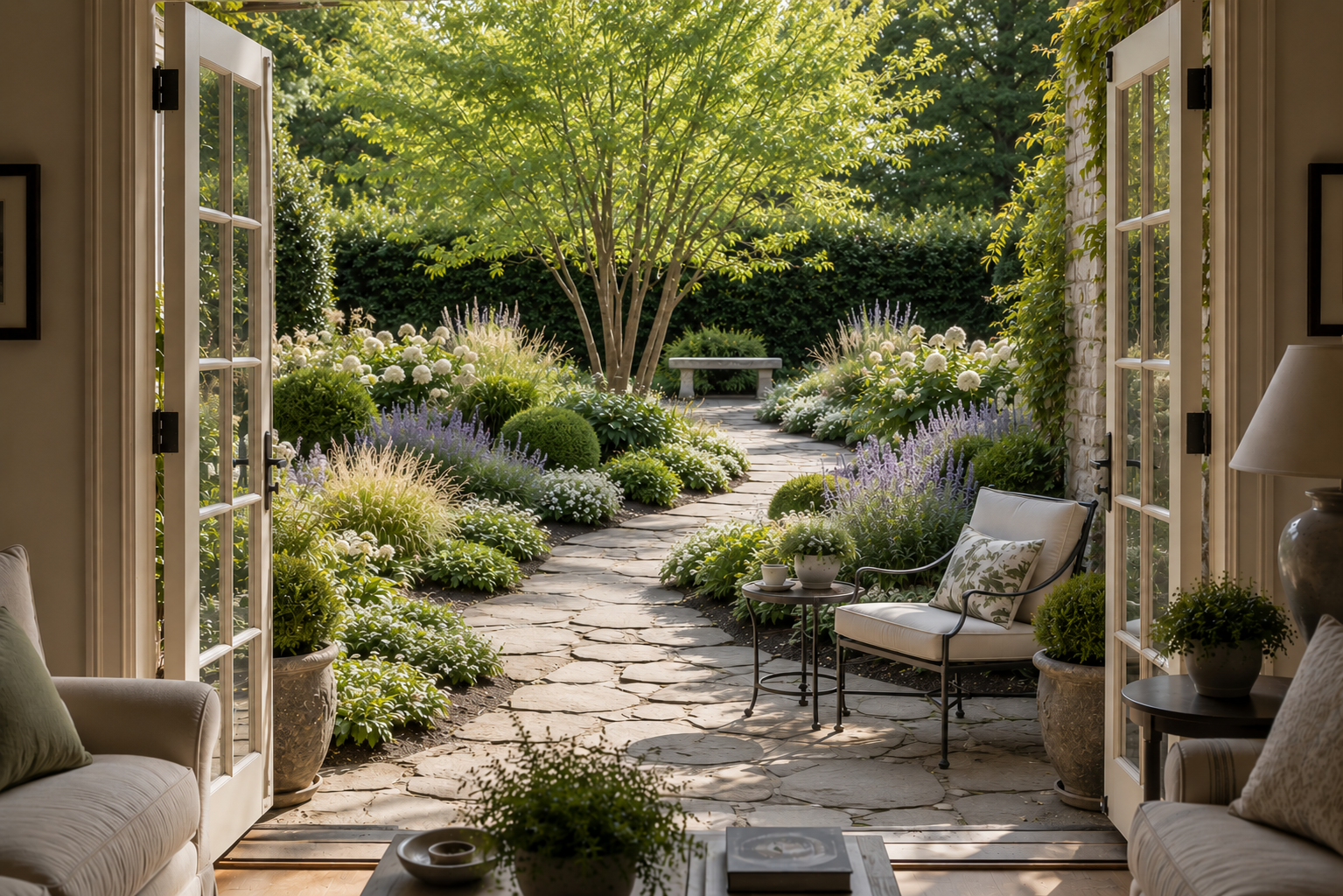
7. Now Walk Outside and Look Back
Once you've identified the views that matter from inside, reverse the process.
Go outside and look back toward those windows.
This helps you understand exactly where a tree, shrub, focal point, or planting combination will have the greatest impact.
You may discover that a plant doesn't need to be centered in the garden at all.
It needs to be centered in the view.
That's an important distinction.
What makes perfect sense on a landscape plan doesn't always tell the whole story.
We experience gardens at eye level.
That's why I like to move between the plan, the garden, and the views from inside the home when I'm thinking through a design.
Each one tells me something different.
Try This at Home
You don't need a landscape plan to try this exercise.
You only need your phone.
Walk through your home and stop at three places where you regularly look outside.
Take a photograph from each one.
Then sit down and study the pictures.
Ask yourself:
Where does my eye naturally go?
What do I enjoy seeing?
Is there a view I'd love to highlight?
What changes throughout the seasons?
And perhaps my favorite question:
What would make me want to keep looking?
Don't worry about changing anything yet.
Just notice.
You may be surprised by how differently you see your garden once you stop looking at it only from the outside.
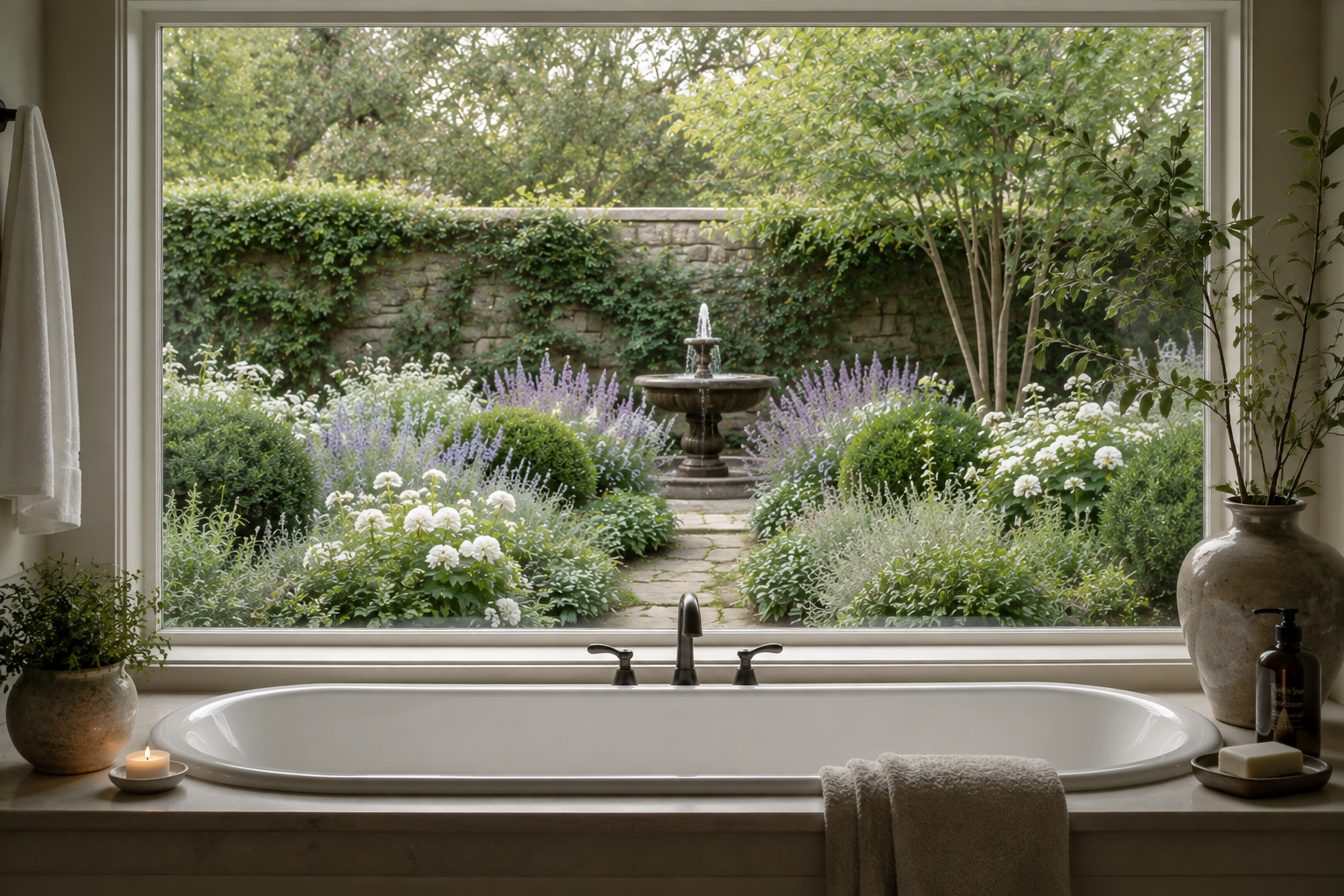
A Garden You Get to Enjoy Every Day
We often think of gardens as destinations.
Places we walk into.
Places we sit.
Places we entertain.
But some of our most frequent experiences with our gardens happen quietly, from inside our homes.
A tree outside the kitchen window.
Grasses moving beyond the dining room.
A favorite shrub catching the morning light.
A garden path visible through the back door.
These small views become part of everyday life.
And that's why I believe some of the best garden design begins not by standing in the garden—
but by standing inside your home and looking out.