

Why Garden Projects Get Stuck—and How to Find Your Next Step

Spring has a way of filling our heads with garden ideas.
A new planting bed. A place to sit under the trees. A path through the side yard. More flowers around the patio. Maybe an entire corner of the garden we’ve imagined changing for years.
Then the season gets busy. Summer arrives, plants grow, life fills the calendar—and some of those ideas remain exactly where they started: in our heads.
As fall approaches, it’s easy to look around and think about everything we meant to do. But I don’t think that’s the most helpful way to look at it.
Instead, I’ve found it more useful to ask:
What would help me see the next step more clearly?
Because often, the thing keeping a garden idea from moving forward isn’t a lack of enthusiasm. It’s a lack of clarity.
Sometimes We Have Plenty of Ideas
Most garden lovers I meet aren’t short on ideas. Quite the opposite.
We save pictures. We notice plants when we’re out walking. We tear pages from magazines, take screenshots, and wander through garden centers thinking, I love that.
Before long, we may have dozens—or hundreds—of things that inspire us. But inspiration and direction aren’t quite the same thing.
You might love a cottage garden overflowing with flowers and also be drawn to a quiet courtyard with clipped evergreens. You might save a beautiful stone path, a modern fire pit, an old wooden gate, and a meadow filled with grasses.
Individually, they’re all ideas you love.
The interesting question is:
What are those ideas telling you about the garden you want to create?
That’s where I like to begin.
Before You Make a Plan, Create a Picture
One of the most useful things you can do before making decisions about your garden is gather your ideas where you can see them together.

Garden Vision Idea Board
I think of this as an Idea Board.
Over the years, I’ve found it so helpful to gather garden ideas in one place before making decisions. I created a Garden Idea Board resource to help with that, but you can use anything that works for you—a Pinterest board, saved photos, magazine clippings, or a simple folder.
What matters is giving yourself one place where you can step back and see the bigger picture.
That’s when something interesting often happens.
Patterns begin to appear. Maybe nearly every garden you’ve saved has a winding path. Perhaps you’re drawn to gardens with lots of green and only a few flower colors. Maybe you keep choosing images with trees overhead, plants spilling over pathways, cozy seating areas, or strong evergreen structure.
Those patterns are clues.
You’re beginning to see your garden before you’ve created it.
Ask Yourself Why
This is the part I think matters most.
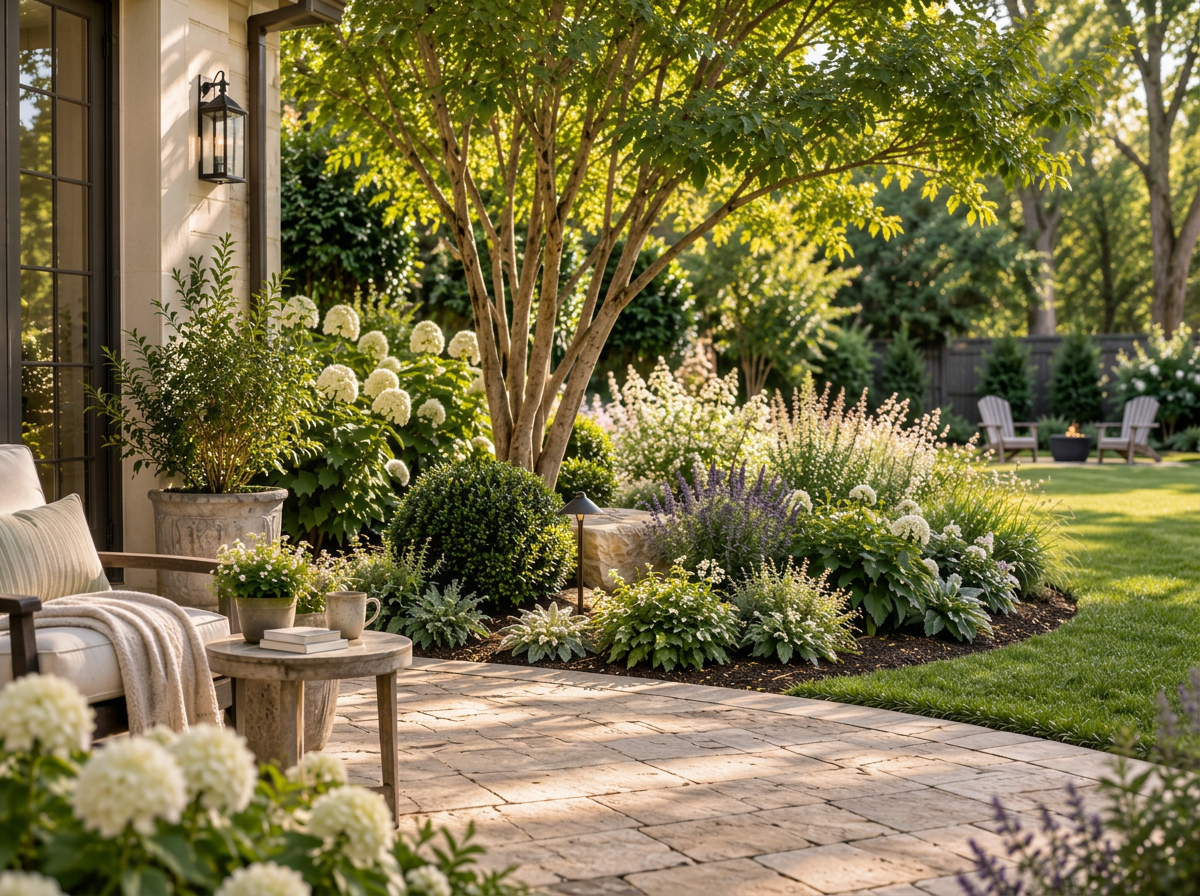
Don’t stop at I like this. Ask yourself:
Why do I like this?
Maybe it isn’t the exact plants in the photograph that appeal to you. Maybe it’s the feeling of being surrounded by them.
Perhaps you don’t actually need that beautiful stone terrace you saved. What you love is the feeling of having a comfortable place where people can gather.
Maybe the garden photo you’re drawn to isn’t really about the flowers at all. It’s the way the path disappears around a corner and makes you wonder what’s beyond it.
When you understand why an image appeals to you, you can begin translating that idea into your own garden. And that is much more useful than trying to copy someone else’s landscape.
Designer’s Note
When you’re creating an Idea Board, try adding a few words beside your favorite images: quiet, lush, welcoming, simple, colorful, private, full of discovery. Those words may tell you as much about the garden you want as the pictures do.
Turn the Picture Into a Purpose
Once you can begin to visualize the garden, the next question becomes much easier:
What do I want this space to do?
This is where an idea starts becoming a design.
Maybe “I need to redo the bed outside the dining room” becomes “I want something beautiful to look at through the dining room window all year.”
Now we know more. We know the view matters. We know year-round interest matters. And suddenly, we’re not simply looking for plants to fill a bed.
We’re designing an experience.
Or perhaps “I want to do something with the back corner” becomes “I’d love a quiet place to sit in the shade with my morning coffee.”
Now we can think about seating, shade, privacy, the view from the chair, and how we might get there.
The clearer the purpose becomes, the easier it is to decide what belongs.

Make the Big Idea Smaller
Sometimes we can picture what we want, but the project still feels too big.
Redo the backyard. Fix the front garden. Create the garden I’ve always wanted.
Those are exciting ideas. They’re also enormous.
So make the idea smaller.
Instead of asking, How do I redesign my backyard? try asking:
What’s one part of the backyard I would love to experience differently?
Maybe it’s the view from the kitchen. Maybe it’s the place where everyone gathers. Maybe it’s one bed that could become the starting point for a planting style you eventually carry through the rest of the garden.
You don’t have to create the entire garden at once. You just need a place to begin.

Find the First Decision
This is something I’ve learned through years of landscape design: a project rarely moves forward because every decision has suddenly become clear.
Usually, one decision makes the next decision easier.
You decide where you want to sit. That helps determine where the path should lead. The path helps shape the planting beds. The beds help determine where structure is needed. Then you can begin thinking about the plants that will bring color, texture, movement, and seasonal interest.
One decision leads naturally into another.
So if you’ve been carrying around a garden idea for a while, don’t ask yourself to solve the entire project.
Ask: What’s the first decision I need to make?
Your Next Step Might Not Be Buying Anything
This is especially important as the year begins to wind down, when it can feel like we need to hurry and get something accomplished.
Your next step may not involve a shovel at all.
It might be taking photos of your garden. Making an Idea Board. Walking the space at different times of day. Measuring a bed. Studying the view from your kitchen window. Noticing where the afternoon sun falls.
It might simply be deciding how you want the garden to feel or choosing which part of the garden matters most to you right now.
Those things may not look like dramatic progress, but they are part of designing.
Clarity is progress.
And sometimes, taking the time to think now makes the decisions that come later much easier.

From Someday to a Starting Point
If there’s a garden idea you’ve been thinking about all year—or perhaps for several years—give yourself a little time this fall to bring it out of your head.
Collect the pictures and look for the patterns. Ask yourself why you’re drawn to them. Think about how you want the space to feel and how you want to use it.
Then make the idea smaller until you can see one clear next step.
You don’t have to know exactly what the finished garden will look like. You don’t have to do everything at once.
You simply need enough of a vision to begin.
Because once you can start to see the garden you’re trying to create, it becomes much easier to see how you might get there.